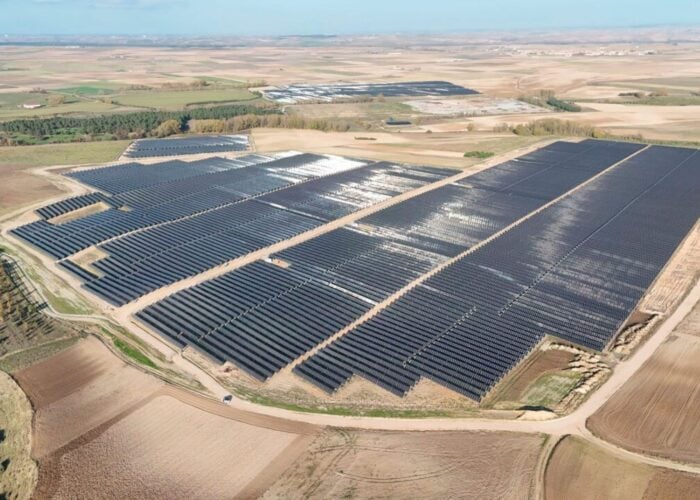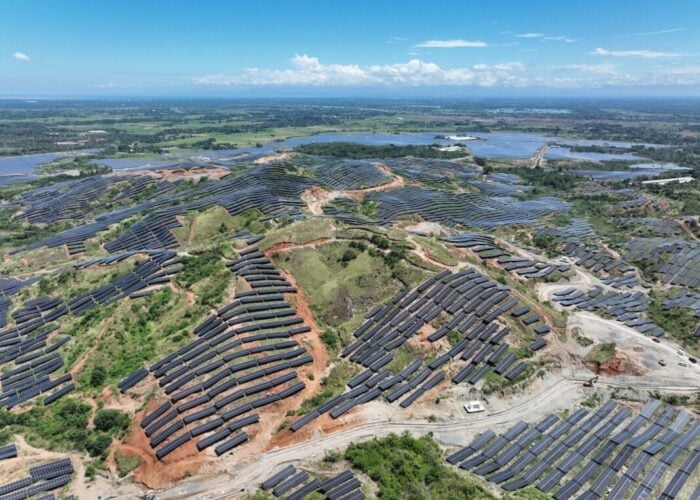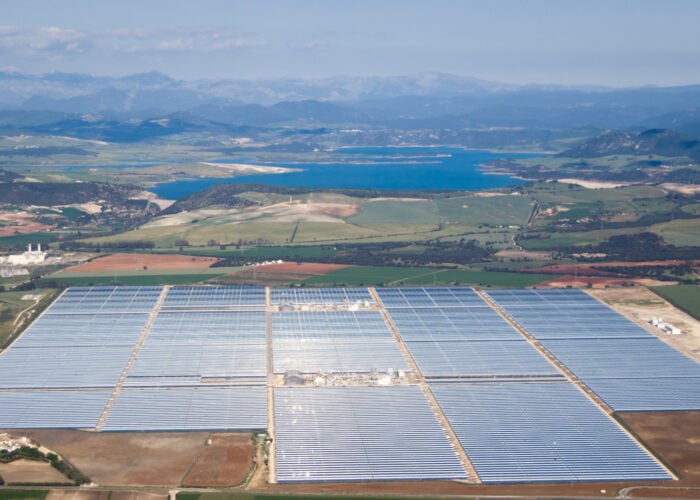
Solar PV has a strong role to play in the Philippines where energy demand continues to grow and the power mix remains expensive. While significant utility-scale solar deployments peaked ahead of a deadline to qualify for the Feed-in-Tariff in March this year, a new subsidy quota is on the horizon. PV Tech caught up with Pete Maniego, senior policy adviser of the Institute for Climate & Sustainable Cities and of Counsel of Dime & Eviota Law, to gather his insights on solar subsidies and how PV can compete with fossil fuels in the Southeast Asian country.
You were quoted recently as saying the government needs to level the playing field for renewables. What solutions would you propose?
Try Premium for just $1
- Full premium access for the first month at only $1
- Converts to an annual rate after 30 days unless cancelled
- Cancel anytime during the trial period
Premium Benefits
- Expert industry analysis and interviews
- Digital access to PV Tech Power journal
- Exclusive event discounts
Or get the full Premium subscription right away
Or continue reading this article for free
I was advocating for a price-based competitive selection process instead of the current cost-based rate fixing. Fossil-fuel fired power plants have the pass-through cost advantage over renewable energy sources. The returns of fossil power plants are guaranteed over the term of the power purchase agreement (PPA). On the other hand, the rates of renewable energy plants are fixed during the Feed-in-Tariff (FiT) period, except for Forex and inflation adjustments.
What do you think should be done to enable smaller companies to compete in the market?
The ‘First to Operate’, ‘First to FiT’ policy of the Department of Energy should be changed. The policy unduly favours big companies with deep pockets and access to financing, whereas small companies find it difficult to secure funding due to the uncertainty of finishing the race on time or within the installation caps.
Companies like Google, IKEA and Facebook are becoming more involved in renewables – with either on-site or with off-site PPAs. What’s your view on large energy users in the Philippines working in a similar way, and how do you think government should reduce the risk for them?
The retail competition and open access policies (RCOA) are mandated under the Electric Power Industry Reform Act, and immediate implementation is being pushed by the Energy Regulatory Commission. Under the RCOA, contestable customers can enter into agreements with retail electricity suppliers other than the distribution utility serving their area. Contestable customers are those with 750kW requirement per month. The threshold will be reduced by 250kW per year until all consumers will be contestable customers. Incentives can also be given to companies for installing solar and other RE power systems that will reduce their peak and energy demand.
Obviously, the Philippines is importing a lot of fuel currently, how would an increase in prices change power prices and how then would they compare with renewables?
The coal-fired power plants have a new lease on life due to the current regime of low fuel prices. Despite the prevailing low fossil fuel prices, solar and wind developers were able to offer lower prices than coal in Chile, the Middle East and the United States. In the Philippines, the Manila Electric Company (Meralco) was able to close PPAs with solar power companies at Php 5.39/kWh (US$0.112), which is competitive with coal.
The Philippines has abundant renewable resources: what mix do you think would work the best?
For the next five years, the Philippines should aim for a 30% share in the power mix based on consumption i.e. GWh, not installation capacity in MW. By 2030, the renewable energy share in the power mix should be 50%. Over the long term, the aspirational target should be 100% renewable energy supply for the country.
Pete Maniego will be speaking at Solar & Off-Grid Renewables Southeast Asia 2016 as it returns for a fourth year in November. This is the distinguished, must-attend event for solar PV companies looking to secure profitable business across the booming Southeast Asian market. Co-location with our established Solar Finance & Investment conference provides an additional day of bespoke content and offers a deeper dive into issues around clean energy financing and long term capital investments across the region. Click here for more information and to register.