Solar PV to outshine other renewables in South Korea

Facebook
Twitter
LinkedIn
Reddit
Email
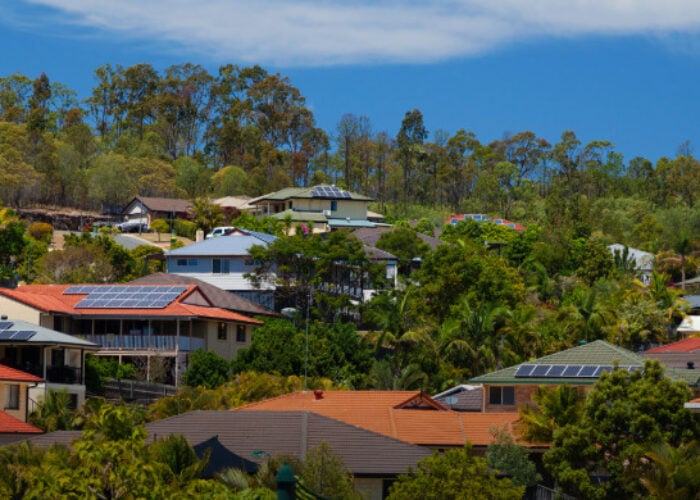
Rooftop PV and large-scale project tenders launched by the Korea Energy Agency will be the main drivers for the growth of solar. Image: Daniel Bernard via Unsplash.

Solar PV will be the most dominant non-hydropower renewable in added capacity during the next ten years in South Korea, according to a report from Fitch Solutions Country Risk and Industry Research.

The installed capacity from renewables will grow from nearly 25GW at the end of 2022 to 46GW in 2032, for which solar PV will contribute 12GW during that timeframe.

This article requires Premium SubscriptionBasic (FREE) Subscription

Try Premium for just $1

  • Full premium access for the first month at only $1
  • Converts to an annual rate after 30 days unless cancelled
  • Cancel anytime during the trial period

Premium Benefits

  • Expert industry analysis and interviews
  • Digital access to PV Tech Power journal
  • Exclusive event discounts

Or get the full Premium subscription right away

Or continue reading this article for free

Rooftop PV and large-scale PV project tenders launched by the Korea Energy Agency will be the main drivers of solar’s outburst.

With the change of government last year, the new administration removed the target for renewables to make up 70% of the power mix by 2050 and revised the targets for the end of the decade from 30.2% to 21.5% as it favoured building more nuclear plants.
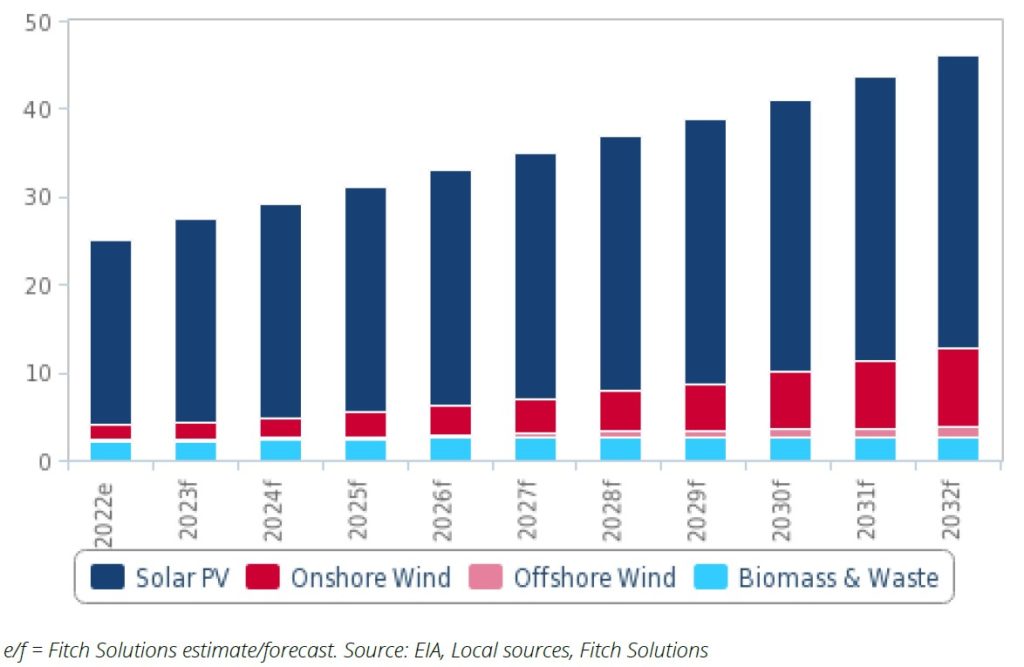
Solar PV will have the highest growth among non-hydropower renewables in South Korea. Image: Fitch Solutions.

However, non-hydropower renewables are expected to experience the strongest growth in the next ten years in terms of electricity supply contribution, with an annual average rate of 6.3%.

Recent announcements in South Korea’s PV sector include local renewable energy developer SK D&D forming a joint venture with Glenmont Partners to invest in solar PV in the country with a first phase comprising 80MW of PV projects and Portuguese utility EDPR Sunseap signing a memorandum of understanding state utility Korea East-West Power to jointly develop renewable projects in South Korea and across the Asia Pacific region.
Read Next

August 17, 2026
New South Wales (NSW) has released a Data Centre Policy Framework that ties streamlined planning approval for new data centres to commitments on renewable energy, water use and cost recovery, becoming the first state to translate Australia's national data centre policy direction into detailed operating rules.
August 10, 2026
An independent review of the Australian Energy Market Operator (AEMO) has recommended 14 changes to the organisation's governance framework.
August 7, 2026
Australia's AEMC sets a renewable energy framework for data centres as NSW introduces REZ-style legislation to control grid access and costs.
August 6, 2026
Australian states can impose stricter renewables rules on data centres than the national minimum, but cannot weaken the federal floor.
August 6, 2026
Australia's coal retirement timeline is creating a circular problem for renewable energy investment, a panel discussion revealed.
Premium
August 3, 2026
Australia's National Electricity Market recorded a combined 3,320GWh of solar generation in July 2026, comprising 1,448GWh from utility-scale assets and 1,872GWh from rooftop systems.

Upcoming Events

Solar Media Events
October 13, 2026
San Francisco Bay Area, USA
Solar Media Events
November 3, 2026
Málaga, Spain
Solar Media Events
November 24, 2026
Warsaw, Poland
Solar Media Events
February 2, 2027
London, UK
Solar Media Events
April 20, 2027
Istanbul, Türkiye