The Spanish government has announced plans to create a capacity market for the national electricity system in order to secure “security of supply” and fully integrate energy storage and demand management into the energy system.
Announced this week by Sara Aagesen, deputy prime minister and minister for ecological transition and the demographic challenge, the system will see generation and storage facility renumerated for “contributing firmness and flexibility to the electricity system,” according to the Ministry for Ecological Transition and the Demographic Challenge (MITECO).
Try Premium for just $1
- Full premium access for the first month at only $1
- Converts to an annual rate after 30 days unless cancelled
- Cancel anytime during the trial period
Premium Benefits
- Expert industry analysis and interviews
- Digital access to PV Tech Power journal
- Exclusive event discounts
Or get the full Premium subscription right away
Or continue reading this article for free
Access to the service will be awarded through technology-neutral auctions for both firm capacity and renumeration price, and a rule that generation projects must not emit more than 500g of carbon dioxide per kilowatt-hour means the system will require the involvement of clean energy generation projects.
Auctions will be split into three categories: a “main auction” open to existing facilities and new projects that will come online up to five years after the award date; an “annual adjustment auction” for facilities that are currently in operation to provide services for twelve months; and a “transitional auction” to deliver energy security in the short-term.
“It is an instrument that will make our electricity system more robust and resilient,” said Aagesen, who has led a number of initiatives to strengthen the Spanish grid following last year’s Iberian blackout. Last June, she announced plans to reinforce the country’s electrical system and strengthen the supervision of operators and this week’s capacity market plan was developed in tandem with the European Commission, which approved the plan in May.
The commission will invest €9 billion (US$10.3 billion) into the new capacity market programme, and concluded that such an investment would not fall foul of its ‘state aid’ rules under the Clean Industrial State Aid Framework (CISAF), which prevent companies from receiving direct government support “unless it is justified by reasons of general economic development.” In June, the European Commission provided €23 billion funding to Italy through the CISAF programme in order to deploy more than 37GW of new renewable energy capacity.
Spain invests €17 billion into grid infrastructure
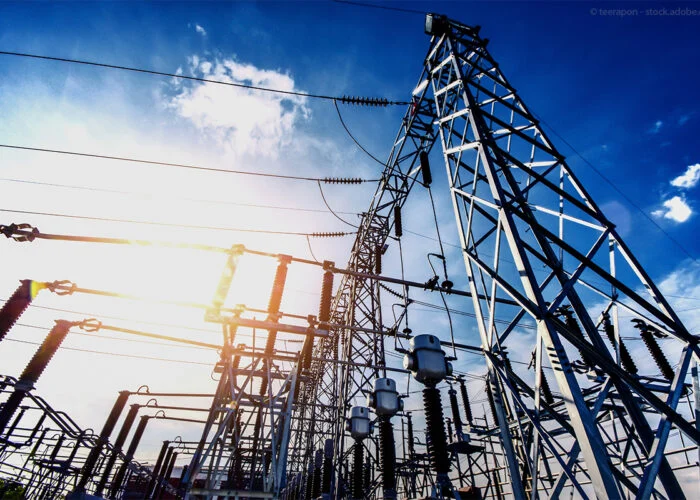
Also this week, Aagesen announced that Spain will invest €17 billion (US$ 19.5 billion) into grid reforms by the end of the decade. The government had initially planned to invest €13.6 billion to this end, but this investment was scaled up in order to meet the targets set by the National Energy and Climate Plan (NECP), which includes, among other goals, expanding Spain’s operational solar PV capacity to 76GW.
The deputy prime minister also said that the deployment targets for the number of substations in Spain has been increased, by 17% to 193, and deployment goals for new power lines has ticked upwards, by 11% to 6,706km. The government also plans to expand existing power lines by 6% to 8,164km.
“This is the largest investment in networks in history, and that is the result of our energy policy, of a country of opportunities and a country of great appeal, because our energy policy has generated a great appetite for electrification: more industry, more housing and more renewables,” said Aagesen.
This scale of investment in the Spanish grid comes after challenges for the country’s energy system, including last year’s blackout and the growing challenge of curtailment. Figures from Aurora Energy Research show that, in the first half of 2026, curtailment reached 2.5TWh in Spain, more than three times the level reported in the first half of 2025 and 50% higher than the total volume of curtailment recorded in the entirety of 2024.