The US solar manufacturing industry is feeling bullish. Despite the policy whiplash inflicted over the summer and the increased pressure on US solar supply chains, leaders from some of the top-level players in the sector are giving strong signals for the future.
PV Tech Premium spoke with Danielle Merfeld, CTO of Hanwha Qcells, earlier this week, who said the company is still on track to produce domestic silicon ingots, wafers, cells and modules by mid-2026, at what will be the US’ first vertically integrated solar manufacturing hub.
Try Premium for just $1
- Full premium access for the first month at only $1
- Converts to an annual rate after 30 days unless cancelled
- Cancel anytime during the trial period
Premium Benefits
- Expert industry analysis and interviews
- Digital access to PV Tech Power journal
- Exclusive event discounts
Or get the full Premium subscription right away
Or continue reading this article for free
The latest in a series of interviews we have conducted with US manufacturers and sector experts ahead of the PV CellTech USA 2025 event next week, our chat with Merfeld painted a picture of a company that wants to make hay even as the sun shines less brightly than it did before.
“The only change [to manufacturing policy support] is really around whether a company is deemed a foreign entity of concern, because then they can’t claim the 45X tax credit, which gives us as domestic producers a competitive advantage,” Merfeld told us.
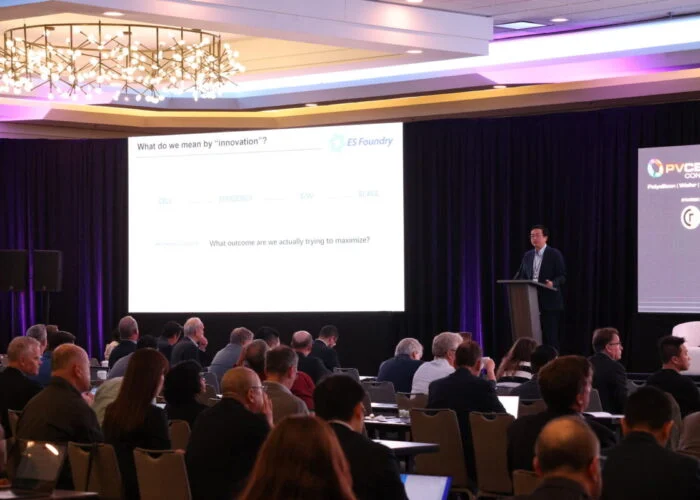
At next week’s conference in the San Francisco Bay Area, Merfeld will lead a presentation during the event’s opening session, “PV manufacturing at a crossroads”. She will join some of the leading figures in US solar manufacturing to deliver critical insights as the domestic solar industry navigates complex policy landscapes and new growth opportunities.
One of those is Alex Zhu, CEO of US-based solar cell producer ES Foundry. Zhu told PV Tech Premium that increased policy certainty would underpin a successful US manufacturing industry. He said the clarification of safe harbour regulations for the remainder of the Investment Tax Credit’s (ITC) lifespan creates stable demand over the next three to four years. That demand allows manufacturers to plan and invest accordingly.
ES Foundry has opted to produce passivated emitter rear contact (PERC) cells at its US facility, bucking the international trend away from PERC towards newer, more efficient tunnel oxide passivated contact (TOPCon) technology. Zhu said this was down to the litigious nature of the US industry and the rise of intellectual property cases over TOPCon technology.
“I really doubt anybody can produce TOPCon cells in the US without too many legal troubles,” he told us.
Richard Rast, CEO of polysilicon producer Highland Materials, is also pursuing unique US production technology. Rast will speak in San Francisco next week about his company’s methods for innovation in the US polysilicon space, which he told us last month could produce polysilicon more sustainably and cheaper than the industry-standard Siemens process.
Policy, trade and manufacturing reality
Day one of the PV CellTech USA conference (7 October) will begin with a discussion on “Policy, trade and manufacturing reality” in the US industry.
Industry leaders and policy experts will examine the impact of recent and proposed tariff measures alongside shifts in global trade dynamics that are reshaping supply chains across the sector.
To kick off our US manufacturing interview series, PV Tech Premium spoke to MJ Shiao, vice president of supply chain and manufacturing at the American Clean Power Association (ACP), who will be speaking next week. He said US manufacturing was “at a crossroads”, where policy and industry action could see it thrive or flounder.
In contrast with Merfeld, Shiao said the policies emerging from Washington were more damaging to manufacturers than any other part of the US industry, as their overall cooling effect on the US market could shrink the opportunities for domestic suppliers.
But much remains to be learned and worked out. With the 2023 and 2024 events selling out, PV CellTech USA has established itself as the essential gathering for understanding gigawatt-scale PV manufacturing trends in the US market. This year’s agenda addresses all aspects of the domestic manufacturing ecosystem, from policy frameworks to production realities.
For anyone invested in the future of US solar manufacturing, this conference offers unparalleled access to the decision-makers and thought leaders shaping the industry’s trajectory.