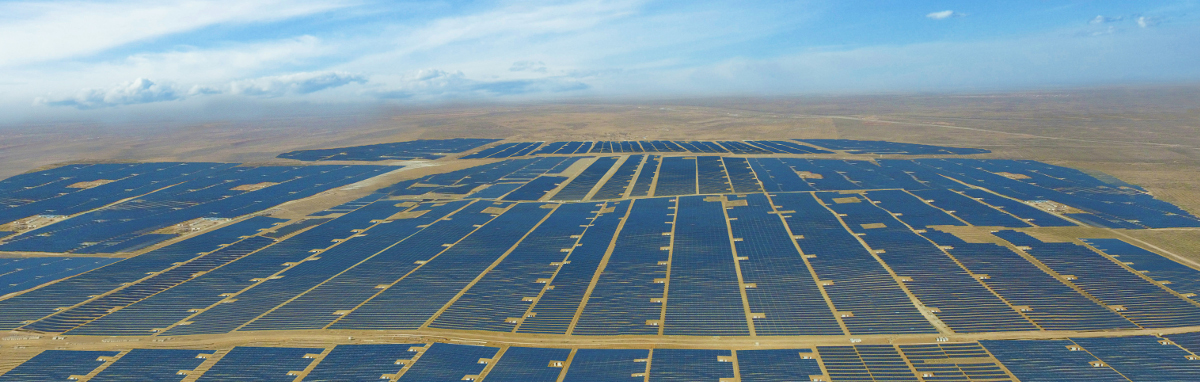
China has set its 2016 solar installation cap at 18.1GW and took significant steps to address curtailment and encourage consolidation, according to leaked documents being widely circulated in China and seen by PV Tech.
A statement by the National Energy Association (NEA) and copied to the National Development and Reform Council, puts the large-scale PV support cap at 12.6GW with a further 5.5GW available to higher-efficiency “top runner” projects.
Try Premium for just $1
- Full premium access for the first month at only $1
- Converts to an annual rate after 30 days unless cancelled
- Cancel anytime during the trial period
Premium Benefits
- Expert industry analysis and interviews
- Digital access to PV Tech Power journal
- Exclusive event discounts
Or get the full Premium subscription right away
Or continue reading this article for free
BIPV, rooftop and self-consumption projects will not be limited.
Three provinces with serious curtailment issues have been excluded, namely Gansu, Yunnan and Xinjinag, were not included in the figures as they do not currently have the right “market conditions” for additional projects, according to the document which was dated 5 June.
“Excluding various provinces is highly likely due to the prevailing grid curtailment and demonstrates the government’s acute awareness of, and determination to tackle this issue,” said Frank Haugwitz, Beijing-based founder of solar consultancy AECEA. “Overall, 18.1 GW, if realized, would mean the market would grow by 20% year-on-year,” added Haugwitz, who first flagged the document to PV Tech.
“The inclusion of 5.5GW of top runner projects, which are subject to competitive bidding, changes the regulatory landscape of China’s domestic market. If successful, the share of top runner is likely to increase in future. Past experience showed that the top runner programme somewhat favours larger companies, hence in future smaller stakeholders may face challenges to stay in business, which leads to a consolidation of the market,” said Haugwitz.
Local governments will have till July to raise any issues with the caps handed down by the national authorities.
It was unclear what fate awaits any projects in the three curtailed provinces.
There are currently only six approved module suppliers for top runner projects, Trina Solar, Jinko, JA Solar, Risen Energy, GCL Systems and Canadian Solar. Participation in the programme requires modules to meet minimum efficiency thresholds. These were set in 2015 at 16.5% and 17% for polycrystalline and monocrystalline modules respectively.
Additional reporting by Mark Osborne