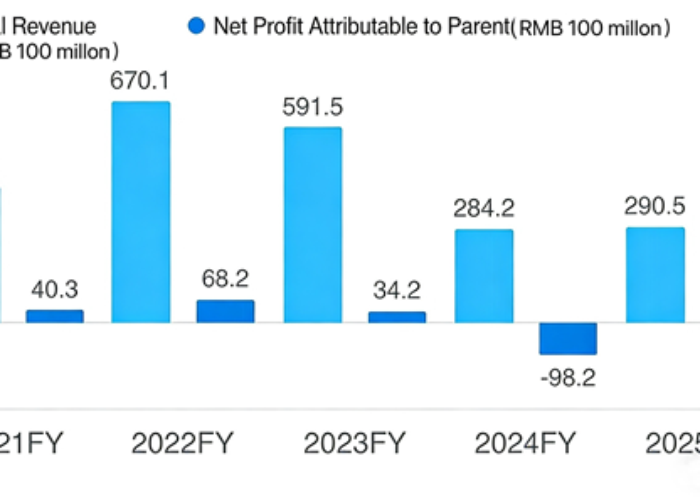
Major Chinese polysilicon producer Daqo New Energy saw both production and sales of polysilicon increase by around 50% in 2023 compared with 2022, whilst the dramatic drop in polysilicon prices slashed revenues from US$4.6 billion to US$2.3 billion over the same period.
“2023 was a year of unforeseen developments and challenges in the solar industry,” said Daqo chairman and CEO Xiang Xu, “with record installation volumes worldwide but also record-low prices by the end of the year.”
Try Premium for just $1
- Full premium access for the first month at only $1
- Converts to an annual rate after 30 days unless cancelled
- Cancel anytime during the trial period
Premium Benefits
- Expert industry analysis and interviews
- Digital access to PV Tech Power journal
- Exclusive event discounts
Or get the full Premium subscription right away
Or continue reading this article for free
The company produced 197,831 metric tons (MT) of polysilicon in 2023, up 47.8% year-on-year (YoY) from 133,812MT in 2022. YoY polysilicon sales rose 50.5% to 200,002MT in 2023, up from 132,909MT the previous year.
However, across 2023 the average selling price (ASP) of polysilicon tanked, from US$32.54 in late 2022 to US$7.97/kg in Q4 2023. This slashed revenues in Daqo’s Q3 results – and brought its yearly revenues down from US$4.6 billion in 2022 to US$2.3 billion in 2023, despite extensive capacity expansions. Gross profit for the year was US$920 million compared with US$3,407.9 million in 2022, and gross margin dropped from 74% to 39.9%.
Xu said: “Despite robust demand growth for solar PV products globally in 2023, the high polysilicon prices driven by capacity mismatches between upstream and downstream players and the resulting supply shortages that we had seen in 2022 were alleviated by early 2023. As a result, polysilicon ASPs declined significantly for the year.”
As 2023 progressed, Daqo’s production focused more and more on n-type silicon, Xu said, as the company buttressed its operational cost and inventory levels against harsh market conditions: “Q4 saw solid demand from customers for our high-quality n-type polysilicon,” he said. “In total, we shipped 59,392MT of polysilicon for the quarter, leaving our finished goods inventory at a very low level of less than one week of production volume across our two facilities. This low inventory level has allowed us to effectively hedge against downside risks during the off-season period close to the end of year.
“During the month of December, our n-type product mix reached approximately 60%.”
Looking forward to 2024, Daqo forecasts ever-greater polysilicon production: “We plan to begin initial production at our new Inner Mongolia 5B facility in Q2 2024, and as such we anticipate full year 2024 production volume to be approximately 280,000 MT to 300,000 MT, approximately 40% to 50% higher than in 2023,” Xiang Xu said.
The company also signed an investment deal to open a new polysilicon production facility in Xinjiang province through its subsidiary Xinjiang Daqo. This facility would have around 100,000MT of polysilicon production capacity once fully operational. The US government has imposed trade tariffs that bar products produced in Xinjiang from passing through customs unless they can prove that their supply chains are free from the alleged forced labour conducted in the region. Discussions are ongoing in the European Union for a similar policy.
Plans for greater capacity expansions in 2024, despite downward price pressure, go some way to confirming predictions made by polysilicon market analyst firm Bernreuter Research in November 2023. Bernreuter called the polysilicon market “cut-throat”, and forecast that the biggest Chinese producers, led by Daqo and Tongwei, would double down on capacity expansions and trigger significant oversupply, effectively squeezing newer entrants out of the market.
Xiang Xu said: “In Q4, as new capacity was released, the price disparity became more apparent between high-quality manufacturers and new entrants. Despite fierce market competition due to the addition to polysilicon supply, we continued to maintain our leadership in both cost and quality.”