The delays caused by the decision-making process required to deploy commercial and industrial (C&I) solar projects are a key obstacle to installing C&I projects, but this does not mean that C&I solar has become completely unviable.
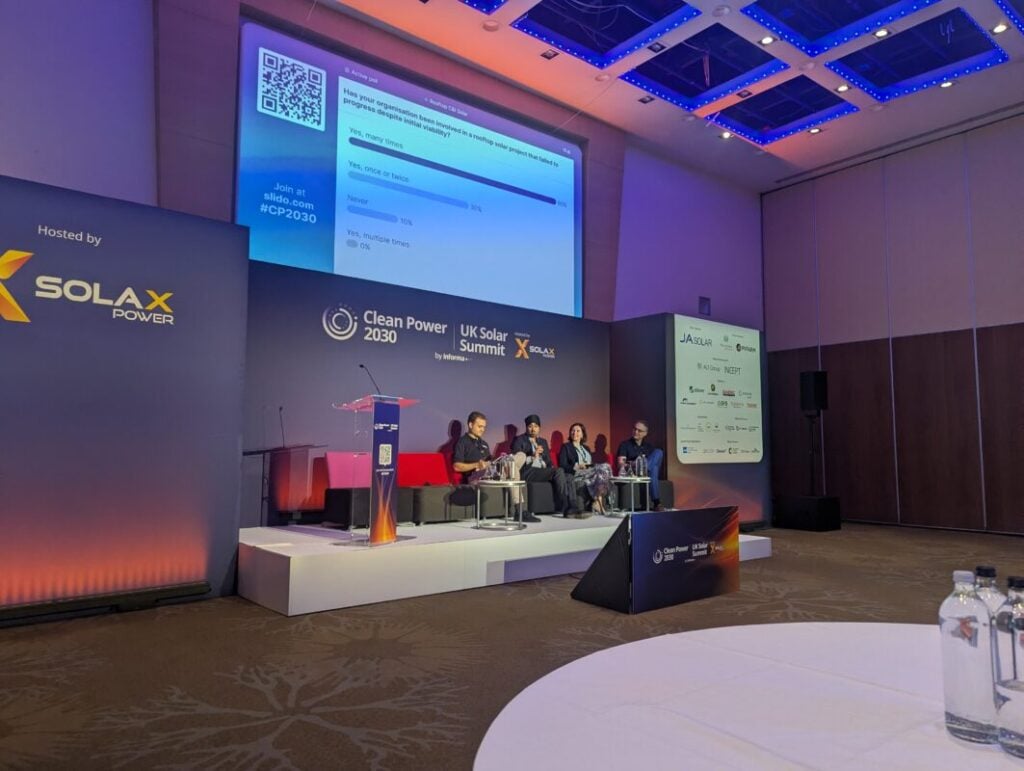
This was an opinion expressed by speakers at a panel discussion at today’s Clean Power 2030 Summit, which was opened this morning by the director of the Clean Power 2030 Unit in the UK’s DESNZ, Ben Golding. Gurpreet Gujral, CEO at independent power producer (IPP) Finlight, which delivers behind-the-meter solar projects in the UK and Spain, said during the panel discussion that delays in the decision-making process can create a sense of “fatigue” among parties involved in that process.
Try Premium for just $1
- Full premium access for the first month at only $1
- Converts to an annual rate after 30 days unless cancelled
- Cancel anytime during the trial period
Premium Benefits
- Expert industry analysis and interviews
- Digital access to PV Tech Power journal
- Exclusive event discounts
Or get the full Premium subscription right away
Or continue reading this article for free
“In terms of actually getting to financial close, I think it’s largely a time thing that causes a lot of problems,” he explained. “You have viable projects that require lots of different stakeholders to get on board and make that decision … all of these have to be part of the process, and often that just takes time to get through the stakeholders.”
The decision-makers involved in deploying a C&I project are a crucial variable as, according to Shimon Shoshani, co-founder and commercial director at C&I solar installer and operator Plugyy Energy Solutions, projects that have “theoretical potential” can be derailed during the decision-making process if the decision-makers are not keen on prolonged negotiations.
“We originate the projects ourselves, so there are a lot of projects that look really attractive,” said Shoshani. “Rooftops and the theoretical potential might be potential, but it’s the decision-making that kills it.”
Gurjal added, however, that these decision-makers are a key part of the process—“nobody wants to not be part of the process”—and the fact that C&I solar participants can be organisations such as supermarkets or retail parks, which may not have expertise in the solar industry in particular, means that there can be a learning curve for new market entrants.
This may slow the decision-making process, but Monika Paplaczyk, investment director at Thrive Renewables, said that working closely, and collaborating more openly, with these decision-makers, and better informing them about the C&I market, could ultimately deliver more projects.
“It’s important when you start conversations that you align on objectives and what each party is trying to achieve and what each party’s red areas [are],” Paplaczyk said. “Really understanding the motivation of why the customer wants to go ahead [is important]: is it about decarbonisation? Is it about being part of a supply chain? These conversations are really important.”
‘Misalignment’ between timeframes of investors, developers and offtakers
Paplaczyk also spoke about a “misalignment” between the timeframes on which investors and C&I developers and offtakers usually operate, calling the decision to invest in a C&I solar project a “very long-term commitment” from an investor, which usually makes decisions on a three-to-five-year basis, rather than the 20- or 25-year length of most power purchase agreements (PPAs).
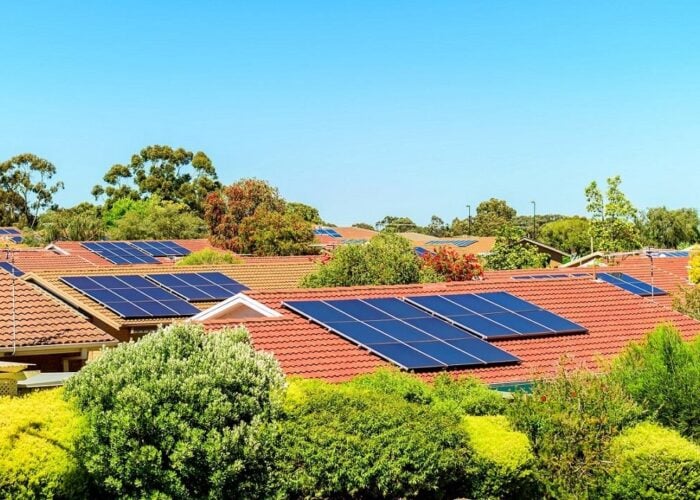
In response, Gurjal said that the idea of signing shorter-term PPAs, which was a topic of conversation at Solar Media’s Renewables Procurement & Revenue summit earlier this year, was challenging for the C&I solar space in particular, where the presence of tenants, rather than individuals and companies that own the buildings on which projects are installed outright, adds another moving part to negotiations.
“We underwrite a project on the basis of a 20 or 30-year lifespan. If the tenant leaves after seven years, you’re then exposed,” said Gurjal, who noted that this imbalance could create an environment where a C&I developer is negotiating from a weak position.
“The landlord could redevelop the site,” he explained. “The landlord might bring in a new tenant who decides that they don’t want to buy energy from you. You’re already embedded within the building [so] you’re on the back foot in negotiations, because the tenant knows that it would cost more to take the panels down … the new tenant will come in and have the electricity for free, and that isn’t bankable.
However, all three panellists agreed that these challenges did not make C&I solar completely unviable
“There’s a lot of good decision making, and it might take time and be frustrating, but it does happen in many cases,” said Shoshani, who added that rooftop solar remains a relatively new industry in the UK, and that the rate of learning and growth in industry expertise is encouraging.
“There’s a good understanding these days about what a PPA is and how it works, so we find it useful to outline, maybe on a single page and circulate it to all the decision-makers, what are the harder points to absorb in a PPA, for example the timeframe.”
“There are a lot of projects that do work and do happen, so it’s not all negative,” agreed Gurjal. “In this country, we’ve done about 500MW of commercial, rooftop and behind-the-meter installations. In Germany, they’ve been doing this a lot longer and solar is culturally more accepted in Germany as it’s a decades-long experience.
“It’s not all doom, and it’s definitely moving in the right direction, but it’s not moving at the same pace as one might expect,” he said. “Our growth isn’t ‘going to explode like [social media] followers and views; we’re building infrastructure!”