Industry experts gathered in Málaga, Spain, for the PV ModuleTech Europe conference earlier this week to discuss the solar PV module procurement landscape for the European market. Here are some of the key takeaways of the event, with quality issues of solar modules – mainly UVID and glass breakage – at the centre stage throughout the two days of the conference.
Other hot topics included traceability, sustainability and the use of automation and artificial intelligence (AI) in different fields.
Try Premium for just $1
- Full premium access for the first month at only $1
- Converts to an annual rate after 30 days unless cancelled
- Cancel anytime during the trial period
Premium Benefits
- Expert industry analysis and interviews
- Digital access to PV Tech Power journal
- Exclusive event discounts
Or get the full Premium subscription right away
Or continue reading this article for free
Frequent readers of PV Tech have more than likely read articles about UVID and glass breakage in the past year, which have been increasingly high-profile issues in the industry and were unsurprisingly a topic of conversation throughout the two days of PV ModuleTech Europe. Concerns about these issues were not only raised by research firms and technical advisors, but also by developers and even some manufacturers.
The trend of increasing cell and module sizes, which leads to thinner glass, can result in higher glass breakage. Tristan Erion-Lorico, VP of sales and marketing at Kiwa PVEL highlighted that this was a huge issue for the industry: “Test failure rates for module breakages are off the charts. No industry has a failure rate of 35%”
At the installation stage, some of the causes highlighted for PV module glass breakage included incorrect installation at the foundation level, during the installation process, or during weeding operations. That last point can even cause damage to the backsheet modules and other equipment in the power plant.
Regarding UV degradation issues, modern silicon solar cells suffer from UV degradation, temperature dependence and intensity of the UV light. However, the UV degradation issues between TOPCon, PERC and HJT are not at the same level, with TOPCon showing the most. “This is an issue that the industry needs to address,” said Erion-Lorico.
More on that topic, as well as how the lack of field data poses a challenge to draw firm conclusions, was covered earlier this week on PV Tech Premium in an interview with Steven Xuereb, executive director of Kiwa PI Berlin, who was also a speaker at PV ModuleTech Europe this year.
Both these issues – UVID and glass breakage – are among the top three in Kiwa PVEL’s module testing, with delamination taking the number one spot. During his presentation, Erion-Lorico mentioned that the delamination issue had already been raised a year and a half ago and was also covered more recently in a guest blog on PV Tech last month.
Ultimately, reliability is a crucial aspect to consider if the industry aims to achieve a lifespan of 30 years or more for solar panels.
Europe’s focus on transparency and sustainability
Another trending topic in the solar industry is the increased interest from various players in the use of automation and artificial intelligence (AI) atboth upstream and downstream levels. At the upstream level, many manufacturers have implemented automation and AI at their manufacturing plants, which helps improve the quality and reliability of the product, as mentioned by a panellist.
At the downstream level, AI-powered analytics can help accelerate the process of certain tasks that could take days or even weeks in a matter of seconds and help unlock insights into field performance and reliability of solar projects.
Another keyword that was mentioned often over the two days of the conference was “transparency”. This was applied not only in terms of supply chain traceability, especially in the European market, which has placed a significant emphasis on environmental, social and governance (ESG) attributes, but also in how manufacturers and developers or independent power producers (IPPs) can collaborate. One of the aspects highlighted was the need for manufacturers to be more transparent about what they can deliver in terms of module bill of materials.
On the topic of ESG, sustainability was also covered during PV ModuleTech Europe through the lens of the Net Zero Industry Act (NZIA) and how the European legislation aims to tackle certain environmental key metrics, including the carbon footprint required to produce a module, which can vary depending on the location from each step of the supply chain (i.e. polysilicon from Germany versus China or cells/modules manufactured in Europe compared with the US or Southeast Asia).
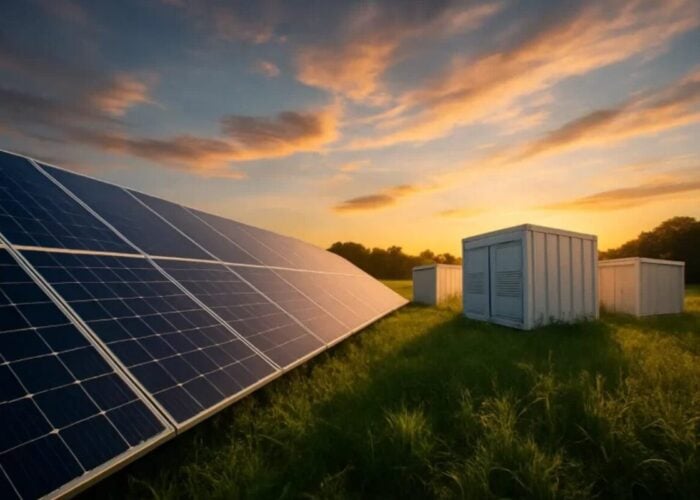
Finally, although the conference was focused on solar PV, battery energy storage systems (BESS) were also part of the conversation in some panels outside of its own spotlight conversation on the second day. ESG risks, the supply chain or the need to audit are not exclusive to the solar industry but also in BESS, as more and more projects are co-located or hybridised with BESS. Wood Mackenzie forecasts 23% of energy storage projects to be paired with solar, while 66% will be standalone and the remaining 11% will be paired with wind by 2034.
Europe is at a stage where solar-plus-storage projects are bankable nowadays. However, things have changed quickly in the last few years at the price level. In 2021, PV modules represented nearly 45% of a project’s cost, while in 2025, it is less than 10% whereas the cost for BESS represents 40%.