The first Chinese polysilicon manufacturer has secured a certification from the Solar Stewardship Initiative’s (SSI) supply chain traceability standard.
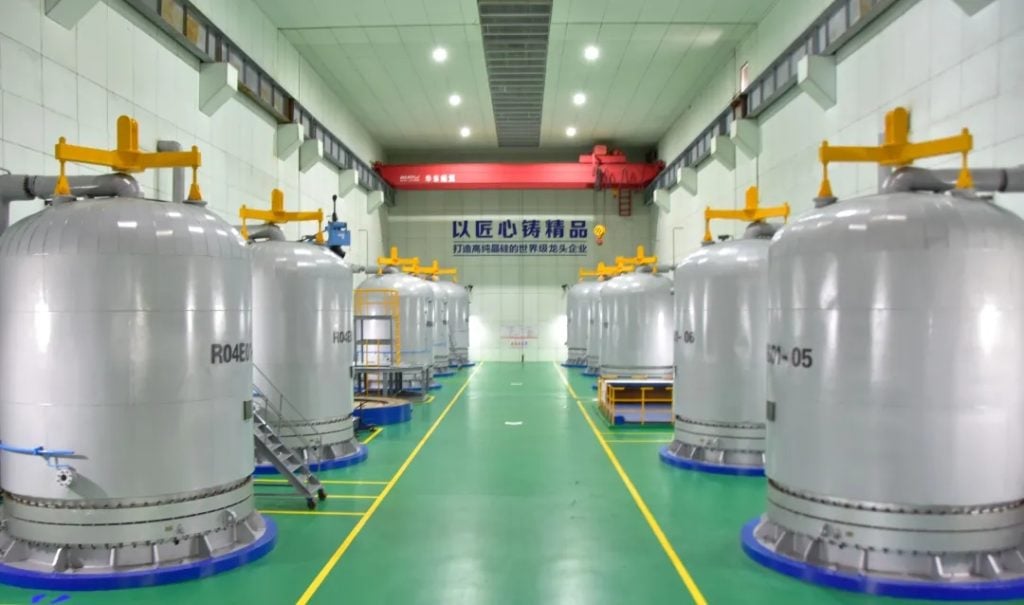
Qinghai Lihao Clean Energy has achieved an initial gold certification under the SSI’s Supply Chain Traceability Standard for its polysilicon production facility in Xining City, Qinghai province, China. The certification was overseen by German technical expert TÜV Rheinland.
Try Premium for just $1
- Full premium access for the first month at only $1
- Converts to an annual rate after 30 days unless cancelled
- Cancel anytime during the trial period
Premium Benefits
- Expert industry analysis and interviews
- Digital access to PV Tech Power journal
- Exclusive event discounts
Or get the full Premium subscription right away
Or continue reading this article for free
This is the first polysilicon production facility to receive a supply certification from the SSI, a solar industry supply chain sustainability assurance scheme.
The Supply Chain Traceability Standard aims to map the provenance of raw materials throughout the solar supply chain, from quartz mining to module assembly. Qinghai Lihao received it for showing traceability in from its quartz supply to polysilicon leaving the factory.
The facility also secured a silver initial certification for the SSI’s environmental, social and governance (ESG) standard, which assesses criteria including carbon emissions, business practises and labour and workforce treatment.
In a statement on the certification, the SSI said: “As the first polysilicon site to receive SSI certifications…this represents a major milestone for the Solar Stewardship Initiative, and for the broader mission to drive responsible sourcing and manufacturing across the solar PV value chain.”
The SSI’s report on the assessment says that traceability was implemented on a “transaction-dependent basis”, where customers requesting traceable product were able to receive it. The same description has been used in other certifications, such as the silver certification of two Trinasolar module assembly plants in May.
Earlier this year, the leading Chinese polysilicon producer Tongwei bought Qinghai Lihao outright. Polysilicon market expert Johannes Bernreuter called the company the “most successful new entrant in the polysilicon market since 2021”. Tongwei, for its part, has separately secured ESG and Supply Chain Traceability Standards for a module production facility in Jiangsu province, China.
The SSI was established by solar industry trade groups SolarPower Europe and Solar Energy UK to offer ESG and traceability standards to the industry, following increased focus on labour practises, traceability and carbon emissions in the industry. Companies voluntarily submit individual facilities for inspection, and if successful, are able to sell their products with SSI certification.
The organisation has faced criticism in the past over the involvement of major Chinese manufacturers in the membership of its founding organisation, SolarPower Europe, and in the process of designing its certifications. As a voluntary organisation, it is naturally limited in its scope and ability to see suppliers or facilities beyond those put up for inspection by manufacturers. The former head of the SSI has previously told PV Tech Premium that involving manufacturers in setting the standards means they are workable in real terms. You can read our previous coverage of this debate (with a subscription) here.