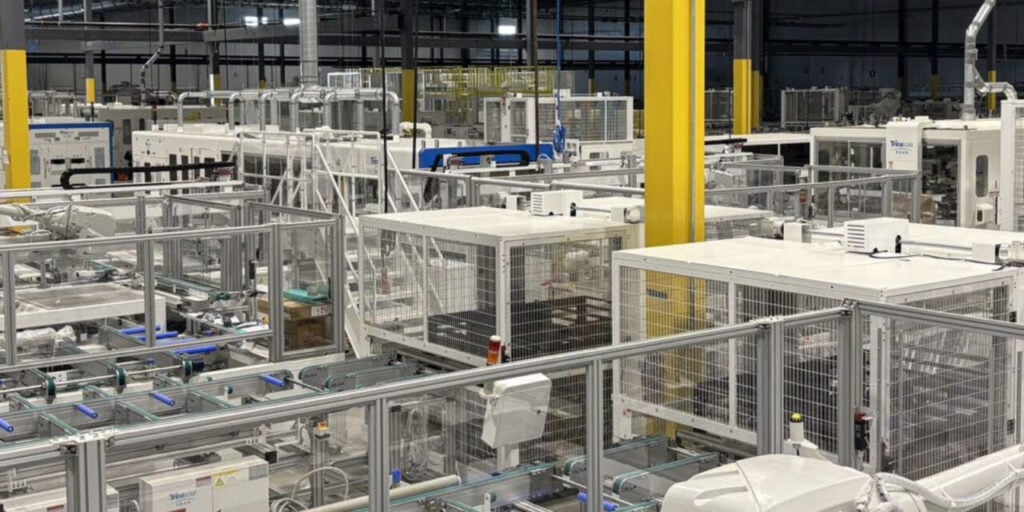
US solar manufacturer T1 Energy has completed its first sale of Section 45X production tax credits (PTCs) to what it described as a “leading, investment grade buyer of tax credits” in a deal valued at US$160 million.
The sale includes tax credits generated through December 2025, and the parties expect to true-up the transaction in February 2026 once T1’s December 2025 module production is confirmed. Domestic manufacturing of solar goods, such as modules, has been a cornerstone of the US tax credit transferability market, with figures from Crux showing that, in 2024, advanced manufacturing was a driving force of the market that had been introduced by the Inflation Reduction Act (IRA).
Try Premium for just $1
- Full premium access for the first month at only $1
- Converts to an annual rate after 30 days unless cancelled
- Cancel anytime during the trial period
Premium Benefits
- Expert industry analysis and interviews
- Digital access to PV Tech Power journal
- Exclusive event discounts
Or get the full Premium subscription right away
Or continue reading this article for free
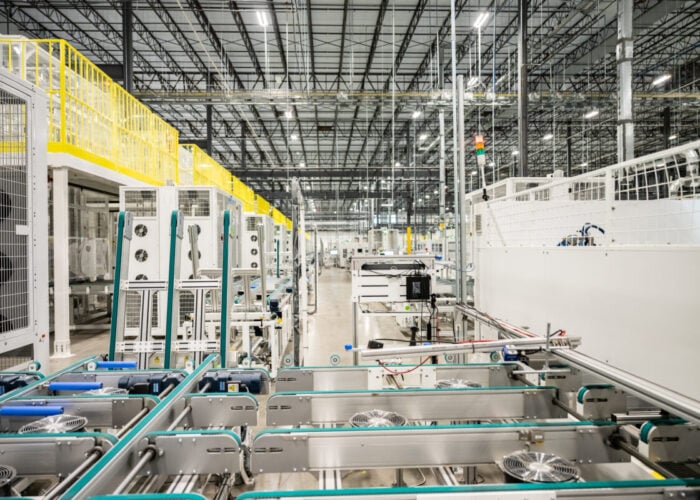
The completion of the deal is an important milestone for T1, which pivoted to the solar manufacturing space from the battery sector in 2024 through the acquisition of a module manufacturing facility in Texas from Trina Solar. T1 sold 725MW of modules in the third quarter of this year, and expects to begin commercial operation at a tunnel oxide passivated contact (TOPCon) cell manufacturing facility next year as it looks to build a domestic solar supply chain in the US.
“Validating our ability to monetise these credits is an important step for T1 as we continue to invest in advanced American manufacturing and grow our domestic production capacity at G1_Dallas, which is fully ramped, and at G2_Austin, our US solar cell fab that is now under construction,” said T1 chief financial officer Evan Calio.
The tax credits have been sold at a ratio of US$0.91 per dollar of PTC generated, which puts the sale in line with other tax credit deals that have been signed this year in the US solar sector. In June, SEG Solar and First Solar both completed deals at a ratio of US$0.94 per PTC dollar, the latter deal helping to push First Solar’s total tax credits sold over US$2 billion.
T1 Energy advances ‘FEOC-compliant’ supply chain
Yesterday, T1 also announced that it had completed deals with Trina Solar “and other parties” to ensure its compliance with the US’ foreign entity of concern (FEOC) regulation, which prohibits companies from benefitting from tax credits if they use components from companies based in or owned by countries deemed to be a threat to US security.
While this technically includes China, Iran, Russia and North Korea, the former’s dominance of the global solar manufacturing industry means that US solar companies have had to ensure their products are not made with components made in China in order to secure tax credit support. T1, for its part, has invested “significant capital” into debt repayments to Trina Solar, bringing the percentage of the company’s debt held by Trina Solar to within the FEOC compliance threshold, according to T1.
Historically, T1 also licensed patents and intellectual property from Trina Solar, which could compromise FEOC compliance. However, T1 noted that Trina Solar has since sold this intellectual property to India-headquartered Evervolt, from which T1 is now licensing the intellectual property, which would make T1’s work FEOC-compliant.
T1 also argued that it has purchased solar cells to be used in module production in 2026 from a “non-FEOC” manufacturer, but did not name this company; T1 also emphasised that much of its 2026 manufacturing work will use components and materials made in the US, either from T1’s own facilities or from fellow US companies Nextpower and Corning.
“Looking to 2026 and beyond, we expect to continue executing our strategy to manufacture FEOC-compliant, high-domestic content, high efficiency and technologically advanced solar energy products for our customers,” said T1 chairman and CEO Dan Barcelo.
FEOC compliance has become a priority for many US solar players, with Gideon Gradman, a managing director at the Energy and Infrastructure Advisory practice at accounting firm Baker Tilly, telling PV Tech Premium this week that there has been a rush to advance projects to a certain stage of maturity by the end of this year in order to avoid FEOC restrictions on the use of products made in China.