The US Department of Energy (DOE) is to fund projects aiming to extend the operational lifetime of solar PV projects to 50 years and support the development of advanced materials such as perovskites.
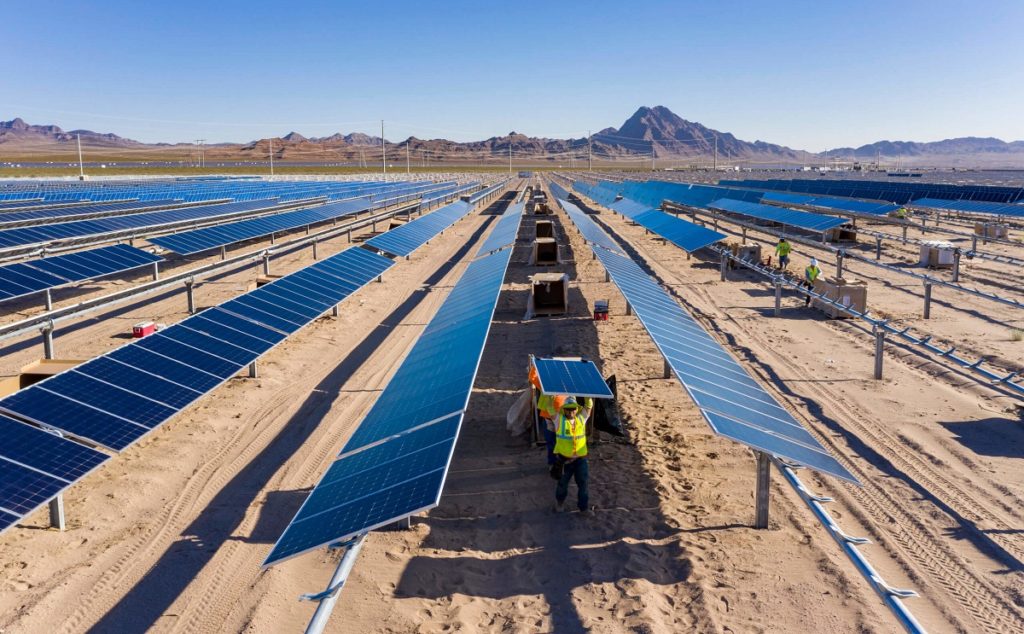
Included within a US$40 million package of funding supporting projects aiming to enhance and develop novel solar technologies, earlier this week the DOE revealed it would invest US$4.5 million into three projects aimed at adding a further 20 years onto today’s expected operational lifetimes.
Try Premium for just $1
- Full premium access for the first month at only $1
- Converts to an annual rate after 30 days unless cancelled
- Cancel anytime during the trial period
Premium Benefits
- Expert industry analysis and interviews
- Digital access to PV Tech Power journal
- Exclusive event discounts
Or get the full Premium subscription right away
Or continue reading this article for free
The projects will receive funding under the 50-Year Service Life PV Systems (PV-50) funding and are being operated by the Electric Power Research Institute (EPRI), kWh Analytics and Solarflexes.
EPRI is to use different field-based and lab-based testing in an attempt to better understand inverter failure modes and identify ways of improving inverter reliability, while Solarflexes has received US$1 million to develop a factory-built, modular array to improve the manufacturing quality and system reliability of solar PV systems through improved assembly controls and integrated designs.
KWh Analytics meanwhile is to receive US$2 million of funding for a project which is to analyse data from operations and maintenance logs to identify the top failure modes and priotisie the development of hardware solutions to solve them, with the prospect of insurance discounts for asset owners and manufacturers who adopt them.
Further funding has also been announced for smaller innovative projects in solar PV, including areas such as perovskites and heterojunction cells, such as:
- Appalachian State University receiving US$300,000 to reduce snow loss from PV systems through the use of pulse heating techniques,
- Columbia University will receive US$250,000 to develop alternative back contact technologies for Cadmium-Telluride (CadTel),
- Dissigno International is to receive US$300,000 to bring forward a new design for floating solar systems,
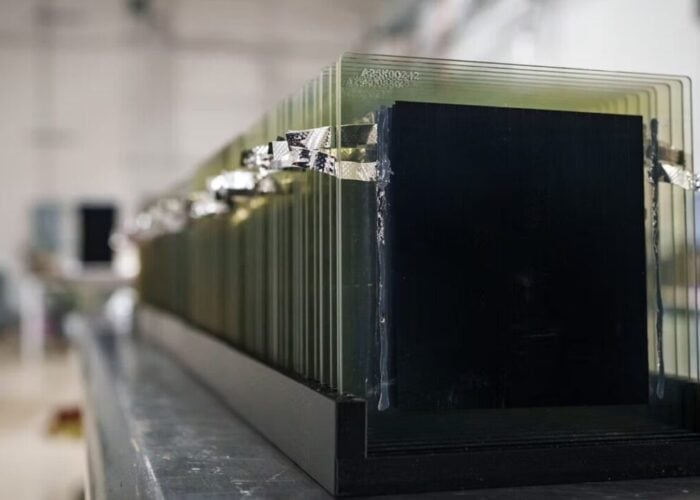
- National Renewable Energy Laboratory will receive US$300,000 to support the development of encapsulation materials specifically to prevent perovskite degradation,
- New York University will receive US$300,000 to develop bifacial CadTel modules by replacing sputter-deposited, opaque back contact for solar cells with two-dimensional nanomaterials that are both transparent and highly conductive,
- Optigon will receive US$300,000 to support research into new material characterisation tools for PV research,
- South Dakota School of Mines and Technology will receive US$200,000 to help support the development of a tool for the disposal, recycling and material recovery of perovskite solar modules,
- The University of Arizona will receive US$150,000 to help improve perovskite stability,
- The University of California – Davis will receive US$250,000 for a project using machine learning to analyse the generation of defects in heterojunction solar cells,
- The University of Nebraska – Lincoln will receive US$300,000 for a proof of concept project looking to develop a fault-tolerant, modular power converter system for PV projects, and;
- The University of Toledo will receive US$300,000 to demonstrate low cost, high efficiency and stable monolithic bifacial perovskite tandem thin-film solar cells.
Energy Secretary Jennifer Granholm said the Biden-Harris administration was “laser focused” on deploying more solar and developing associated technologies.
“Research to develop stronger and longer-lasting solar panels is critical to addressing the climate crisis. The 40 projects announced today – led by universities and private industry across the country – is an investment in the next generation of innovations that will strengthen the nation’s solar capacity and enhance our grid resilience,” she said.
The US$40 million in funding is the first tranche of a US$128 million research and development funding exercise designed to slash the cost of utility-sale solar by 60% this decade, launched by Granholm in March this year.