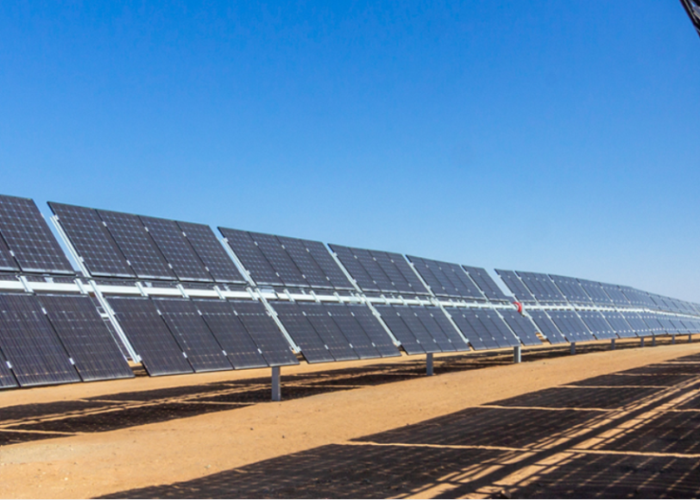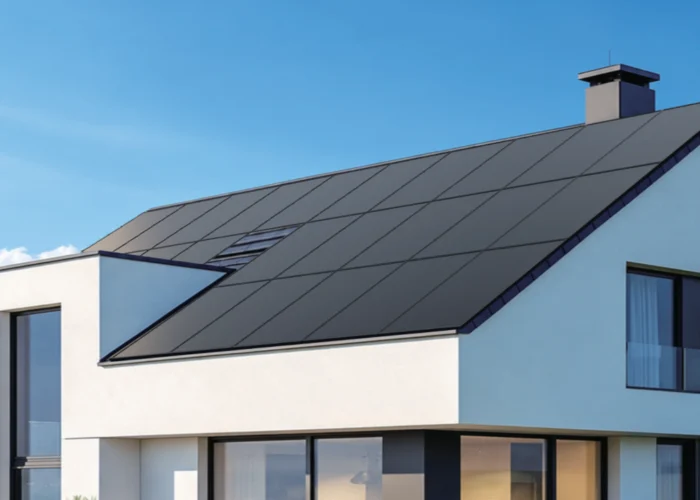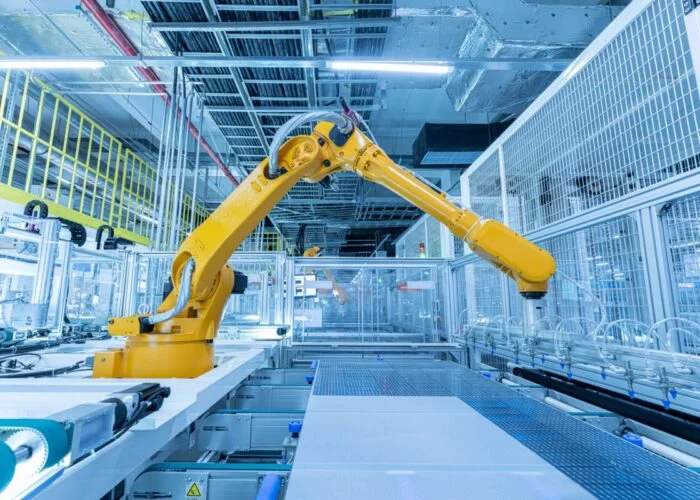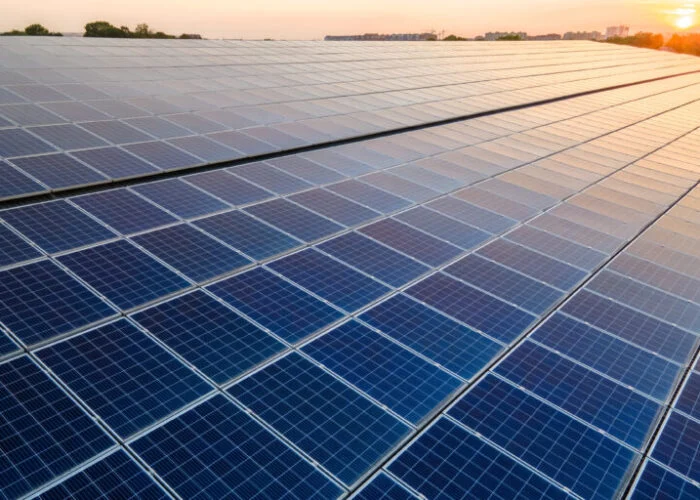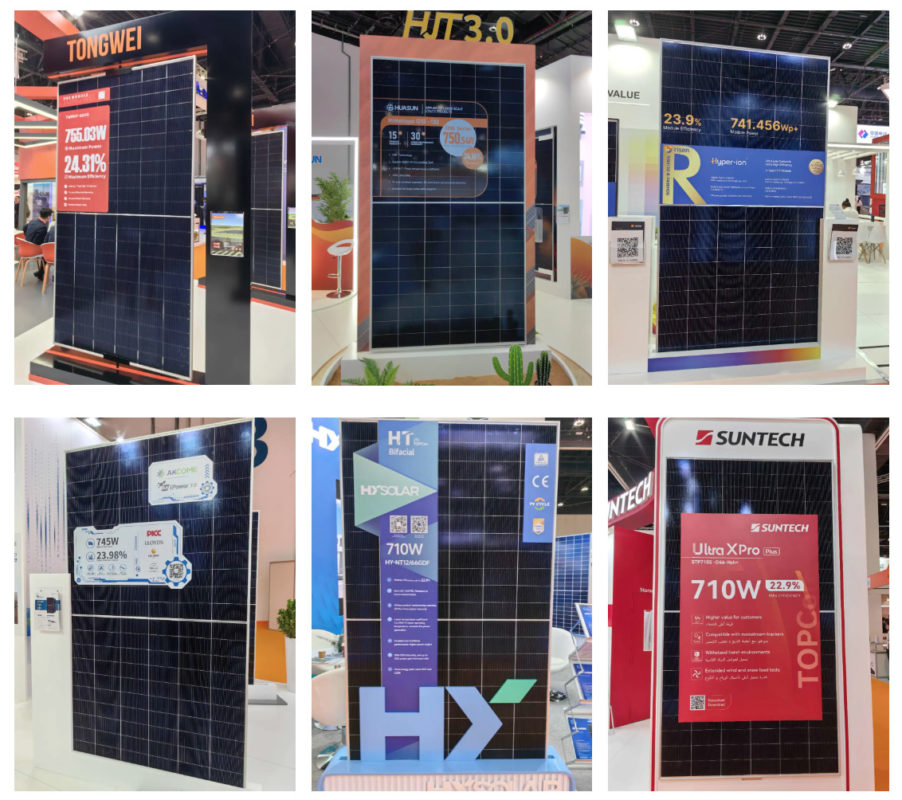
The World Future Energy Summit and Exhibition (WFES), the most influential energy event in the Middle East, was held in Abu Dhabi from 16-18 April. PV Tech was in attendance, and 700W modules were among the highlights of the event.
Judging from the products on display, n-type has become the mainstream technology of this exhibition. Due to the trend towards larger modules and higher output, larger products, such as 182mm and 210mm modules, have become the key devices on display at the exhibition.
Try Premium for just $1
- Full premium access for the first month at only $1
- Converts to an annual rate after 30 days unless cancelled
- Cancel anytime during the trial period
Premium Benefits
- Expert industry analysis and interviews
- Digital access to PV Tech Power journal
- Exclusive event discounts
Or get the full Premium subscription right away
Or continue reading this article for free
In terms of module performance, heterojunction (HJT) modules were among the most common, and the products exhibited by various module companies had power capacities exceeding 700W. Reaching 755.03W, the THC HJT module exhibited by Chinese manufacturer Tongwei was the module with the highest output. The company’s modules in this series have broken the dual records of HJT power and efficiency six times.
In addition to conventional module exhibits, differentiated products, such as lightweight and flexible modules, were also on display. Among them was Sunman Energy’s Dragonfly module, a 520W glass-free lightweight module made of polymer composite materials. This attractive new module plus installation system weighs just 4.1kg/㎡, which is 60% lighter than conventional glass modules.
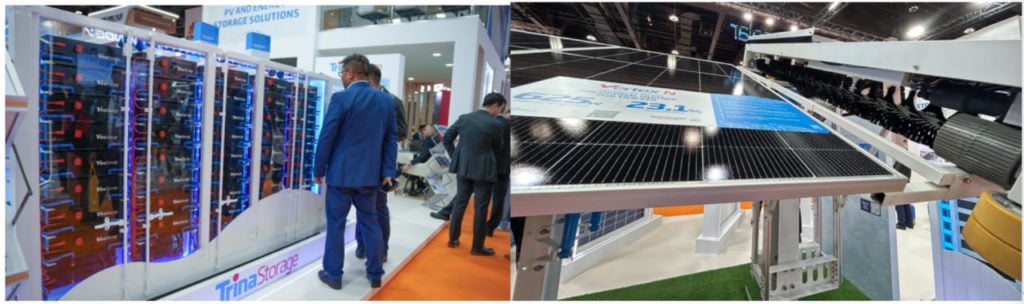
At the exhibition, Trina Solar and JinkoSolar not only displayed modules but also unveiled their storage products. In particular, Trina Solar showcased its innovative and upgraded products, such as the Vertex n-type module, which will soon be deployed in the Philippines; Elementa 2, the new generation of flexible storage battery compartment; the upgraded Vanguard 1P intelligent tracking solution; and the Tiance cleaning robot.
In addition to the leading module companies, there were also new faces at the exhibition, such as Hoshine Silicon, a world leader in silicon production that announced plans to enter module manufacturing last July. Hoshine participated at WFES for the first time and exhibited its module products alongside new silicon materials, demonstrating its involvement across the solar supply chain.
According to those from Hoshine at WFES, the company is aiming for a module manufacturing capacity of 20GW. It has production bases in Xinjiang province and Jiaxing city and its own supply of important components, such as polysilicon, silicon wafers, batteries, glass and frames.
The Middle East region is known for its large-scale PV power plants and low bidding prices, especially for the large ground-mount power plants in the UAE and Saudi Arabia. At the same time, the area benefits from an abundance of sunlight, strong policies to support renewable development and mature project bidding mechanisms, all of which have driven interest in the region’s PV sector.
This year, WFES was dominated by local exhibitors from the Middle East, alongside companies from China, India, South Korea and Japan. In the module sector in particular, this included Trina Solar, JA Solar, Tongwei, Canadian Solar, Risen Energy, Astronergy, Das-solar and JinkoSolar, which announced “zero carbon” n-type tunnel oxide passivated contact (TOPCon) modules earlier this year.
The most common products highlighted at the event included modules, inverters, storage systems, rack systems and intelligent cleaning robots, which have seen increased attention across the solar sector in recent years.