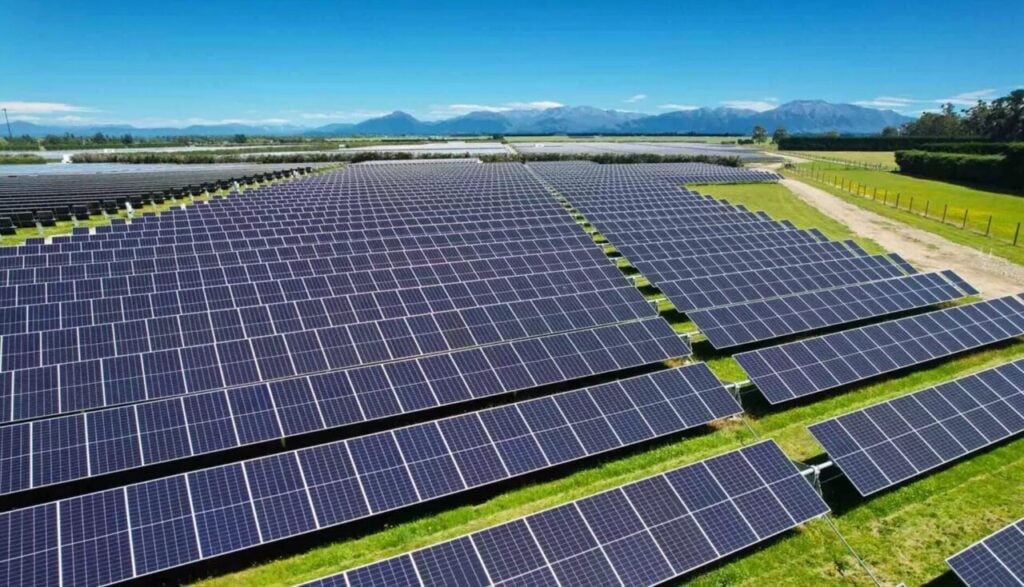
Genesis Energy and FRV Australia have mutually agreed to terminate their solar development joint venture while maintaining co-ownership of the 63MWp Lauriston solar PV power plant in Canterbury, New Zealand.
According to the companies, the decision follows separate strategic reviews and reflects the natural evolution of their respective business strategies.
Try Premium for just $1
- Full premium access for the first month at only $1
- Converts to an annual rate after 30 days unless cancelled
- Cancel anytime during the trial period
Premium Benefits
- Expert industry analysis and interviews
- Digital access to PV Tech Power journal
- Exclusive event discounts
Or get the full Premium subscription right away
Or continue reading this article for free
The partnership dissolution was announced today (7 October). Genesis Energy chief operating officer Tracey Hickman stated that the decision reflects “the natural evolution of the companies’ respective strategies and the growing capability of the development team within Genesis.”
The companies emphasised that the termination was reached on good terms and highlighted their collaboration in accelerating solar development in New Zealand.
Despite ending their development partnership, both companies will continue their co-ownership and operation of the 63MW Lauriston solar PV power plant, which Genesis and FRV Australia opened as New Zealand’s largest solar PV power plant in April 2025.
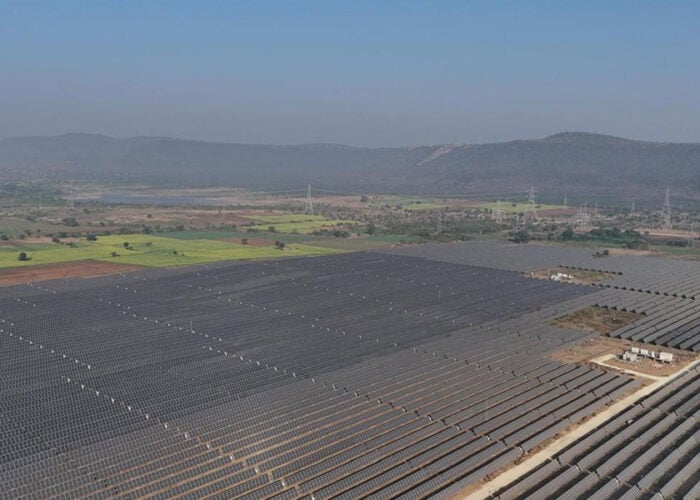
The site, featuring over 90,000 solar PV modules spread across a 93-hectare site, is located west of Christchurch on New Zealand’s South Island, near the Rakaia River in the Canterbury Plains area.
Construction commenced in April 2024 and was carried out by Melbourne-based EPC company Beon Energy Solutions. The construction cost totalled NZ$104 million (US$60 million), with financing provided by the Bank of New Zealand and MUFG Bank Ltd.
The original joint venture, established in late 2021, aimed to develop up to 500MW of solar capacity across New Zealand over five years.
The partnership was designed to generate approximately 750GWh annually. The Lauriston project represented the first major milestone in this development programme.
Genesis Energy continues renewables expansion in New Zealand
Genesis Energy continues to pursue its Generation Development Programme, which encompasses various solar, wind and geothermal projects designed to increase renewable energy output and reduce reliance on gas generation.
The company’s strategy aligns with its Gen35 target of achieving 95% renewable energy generation by 2035. Recent additions to Genesis’s portfolio include a 127MWp solar PV project located near Edgecumbe in the Bay of Plenty. It is expected to start generating electricity in 2026.
Meanwhile, FRV Australia, part of Jameel Energy and the Canadian infrastructure fund OMERS, remains active in the Australian and New Zealand renewable energy markets. Recent strategic acquisitions and developments have continued its portfolio expansion.
Earlier in 2025, the company announced the acquisition of the 190MW Axedale Hybrid Solar & Battery Storage Project and commenced construction of the 100MW/200MWh Terang BESS in Victoria.
The company’s operational portfolio includes diverse projects across multiple Australian states.
In Queensland, FRV operates the 125MW Lilyvale and the 2.45MWdc Dalby solar PV power plants, while Victoria hosts the 106MW Winton Solar Farm. New South Wales accommodates several facilities, including the 70MW Goonumbla, 115MW Metz, 56MW Moree, and 90MW Sebastopol solar PV power plants, alongside the newly operational Walla Walla facility.