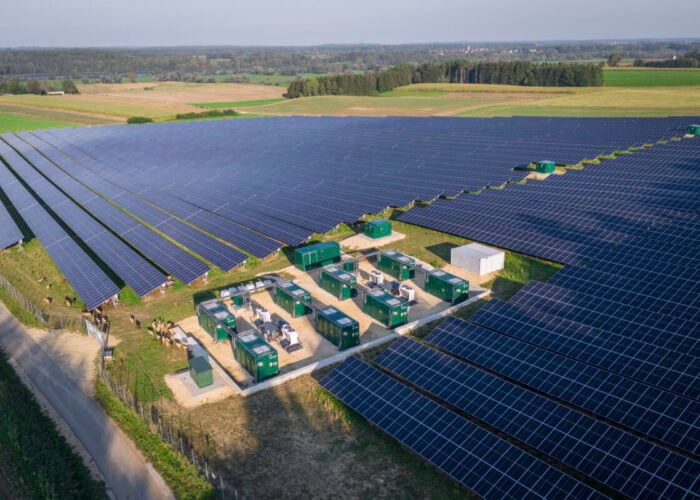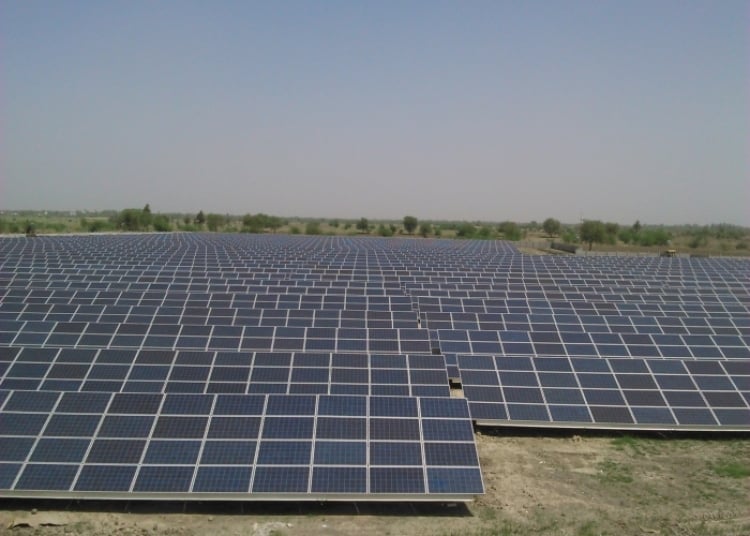
India’s Ministry of New & Renewable Energy has invited developers to bid for a total of 2GW of solar projects in the country via Solar Energy Corporation of India (SECI).
According to a document published by SECI, a developer is required to submit a bid with a minimum capacity of 50MW by 10 May, while it can also bid for up to 2GW. However, its bid can only be in multiples of 10MW.
Try Premium for just $1
- Full premium access for the first month at only $1
- Converts to an annual rate after 30 days unless cancelled
- Cancel anytime during the trial period
Premium Benefits
- Expert industry analysis and interviews
- Digital access to PV Tech Power journal
- Exclusive event discounts
Or get the full Premium subscription right away
Or continue reading this article for free
Enhancement of or adding extra capacity to already commissioned projects, irrespective of their capacities, will not be considered as eligible project under this scheme. When it comes to the project location, bidders could choose at their “own discretion of cost, risk and responsibility”.
The successful bidders will form a power purchase agreement (PPA) with SECI for 25 years. SECI will sell the procured power to different entities in India. The commissioning date will start 18 months from the signing of the PPA.
Additionally, projects that have been commissioned will not be considered in this tender, but projects under construction or projects which are not yet commissioned will be considered in case these projects have not been accepted under any other central or state schemes.
India has been developing its solar module manufacturing capabilities. With a recent wave of policies and renewable reforms, investments are set to be boosted in India with solar-wind hybrid projects and corporate power purchase agreements among key trends.
Driven by reduced battery storage costs and solar energy, hybrid projects are cost-competitive, and with the optimal combination of solar, wind and storage, they can deliver stable round-the-clock (RTC) power at comparable costs to standalone solar and wind tariffs.
Hybridising solar and wind projects would reduce the variability of both resources separately, along with optimising the use of its infrastructure. Therefore, the government has increased its push for hybrid projects with tenders for RTC and hybrid projects rather than separate ones for solar or wind.