Sol Voltaics closes US$21.3 million in new funding to commercialise GaAs nanowire film

Facebook
Twitter
LinkedIn
Reddit
Email
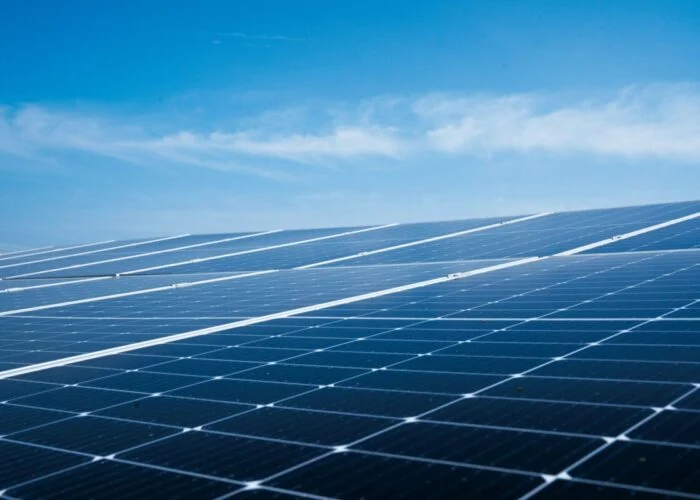
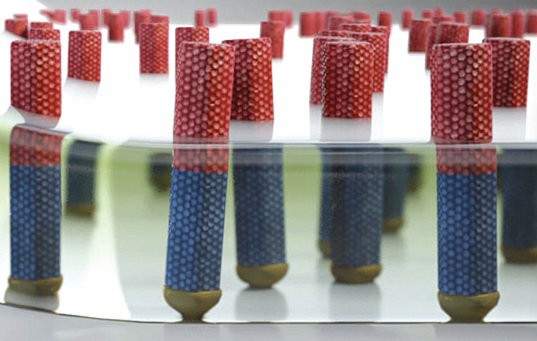
The record round of funding secured by Sol Voltaics is intended to accelerate the commercialization of its technology, claimed to enable PV module conversion efficiencies of up to 27% when integrated as a tandem-junction module. Image: Sol Voltaics

Sweden-based solar cell nanowire materials start-up Sol Voltaics has secured US$21.3 million in a new funding round just a month after claiming a key breakthrough in commercializing its gallium arsenide (GaAs) nanowire film for crystalline silicon solar cells.

The record round of funding secured by Sol Voltaics is intended to accelerate the commercialization of its technology, claimed to enable PV module conversion efficiencies of up to 27% when integrated as a tandem-junction module.

This article requires Premium SubscriptionBasic (FREE) Subscription

Try Premium for just $1

  • Full premium access for the first month at only $1
  • Converts to an annual rate after 30 days unless cancelled
  • Cancel anytime during the trial period

Premium Benefits

  • Expert industry analysis and interviews
  • Digital access to PV Tech Power journal
  • Exclusive event discounts

Or get the full Premium subscription right away

Or continue reading this article for free

The latest investment round includes Norway-based Watrium AS, alongside previous investors Kagra Gruppen AS, Nordic VC firm Industrifonden, FAM AB, Nano Future Invest, Blue Marlin AB and Teknoinvest AS. 

Sol Voltaics said that it had raised US$38 million in the past 12 months, following the company’s US$17 million funding round in 2016.

“This latest round of finance gives us the critical capital required to commercialize our efficiency boosting technology for the solar market,” said Erik Smith, Sol Voltaics CEO. “Having achieved our final major technology milestone with Aerotaxy earlier this year, we are now fully focused on reaching mass production of SolFilm. I’d like to thank our investors, both existing and new, for backing our vision and helping bring this revolutionary technology to the mass market.”

Sol Voltaics expects samples of its ‘SolFilm’ to be sent to partners by the end of 2018.
Read Next

August 28, 2026
Importing solar modules to the US will “no longer make any economic sense” under new Section 232 tariffs for polysilicon-based products, according to Intertek CEA.
Premium
August 27, 2026
Domestically produced solar glass is a key gap in the US PV manufacturing ecosystem. Tom Kenning reports on efforts to kick-start local production of this vital material
August 24, 2026
Stronger downstream demand drove a surge in wafer prices last week, according to the latest figures from the Silicon Industry Branch of the China Nonferrous Metals Industry Association.
August 17, 2026
China’s polysilicon market saw no new transactions last week, with quoted prices remaining at the previous week’s baseline.
August 14, 2026
Foreign Entity of Concern rules create a multitude of new risks for US solar developers, some less visible than others. Intertek CEA’s Jordan Wilson explores the key steps towards minimising FEOC exposure in PV module purchase agreements.
August 13, 2026
South Korean PV producer Hanwha Solutions, parent company of Q Cells, has had a long-contested passivation patent revoked in Europe.

Upcoming Events

Solar Media Events
October 13, 2026
San Francisco Bay Area, USA
Solar Media Events
November 3, 2026
Málaga, Spain
Solar Media Events
November 24, 2026
Warsaw, Poland
Solar Media Events
February 2, 2027
London, UK