The US National Laboratory of the Rockies (NLR) has certified tunnel oxide passivated contact (TOPCon) modules produced by Chinese solar manufacturer Runergy with a conversion efficiency of 25.9%.
The modules are the company’s TOPCon 3.0 series, its third generation of TOPCon panels that was launched at this year’s Intersolar Europe event in June. During the event, Runergy said that the cells have a maximum conversion efficiency of 26.9%, slightly higher than NLR certified, but the company said that the module efficiency figure is still “a record for all non-HBC (heterojunction back contact) crystalline-silicon modules”.
Try Premium for just $1
- Full premium access for the first month at only $1
- Converts to an annual rate after 30 days unless cancelled
- Cancel anytime during the trial period
Premium Benefits
- Expert industry analysis and interviews
- Digital access to PV Tech Power journal
- Exclusive event discounts
Or get the full Premium subscription right away
Or continue reading this article for free
The company also specified that the standard-format mass-produced variant of the module series would have a power output of 660-670W, meaning both the module’s efficiency and output metrics clear the minimum values introduced by the Chinese government over the summer. For TOPCon modules to be made available to sell, they must have a conversion efficiency of 23.2% and a minimum rated power of 630W, starting from next year.
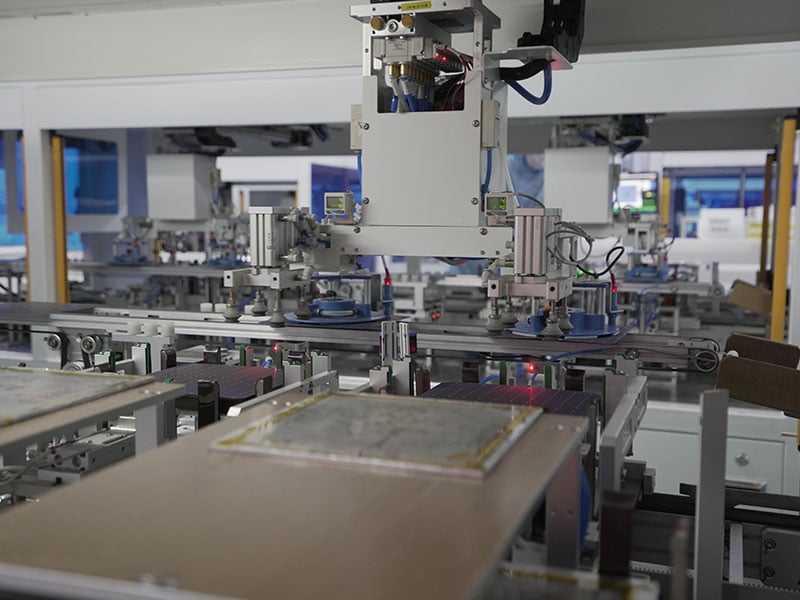
Runergy attributed the strong output of its latest modules to a “multi-cut circuit architecture” that minimises power losses within the module.
“This is not just a new TOPCon module world record,” said Runergy general manager and PV R&D laboratory director Tao Longzhong. “Critically, the module is fabricated using cells and module processes from mass‑production‑ready pilot lines, proving high efficiency and commercial manufacturability can go hand‑in‑hand.”
This emphasis on developing modules that can be quickly produced at scale is significant, as module installations in China grew significantly in July. According to data from China’s National Energy Administration (NEA), China added over 14GW of new solar PV capacity in July, a 28% year-on-year increase in capacity additions.
However, the long-term picture is less clear, as the China Photovoltaic Industry Association (CPIA) expects annual capacity additions to fall from 315GW last year to between 180GW and 240GW this year, as the industry looks to slow capacity additions to tackle the unsustainably low prices that have affected the sector for several years.
NEA figures show that China added 86.2GW of new capacity in the first seven months of this year, a pace that would put year-end capacity additions lower than even the more conservative estimate made by the CPIA earlier this year.