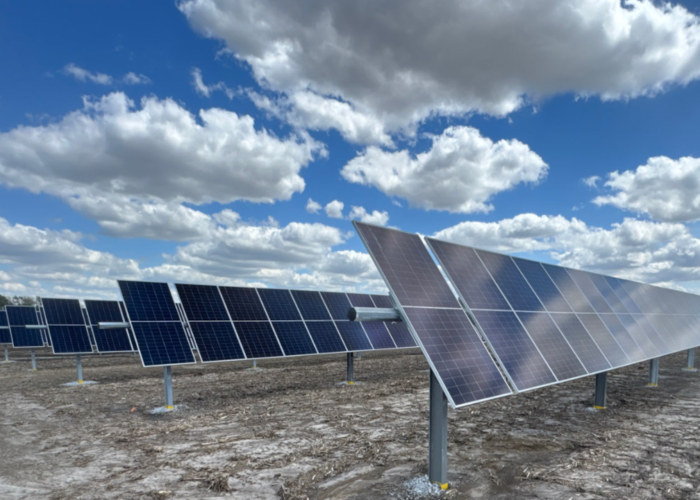
US Customs and Border Protection (CBP) has detained solar modules produced by Vietnam-based solar manufacturer VSUN under the Uyghur Forced Labor Prevention Act (UFLPA).
VSUN’s parent company, Japanese firm Abalance, confirmed the detention late last week, saying it expected the incident to knock around JPY3-5 billion (US$18 -31 million) off its yearly earnings.
Try Premium for just $1
- Full premium access for the first month at only $1
- Converts to an annual rate after 30 days unless cancelled
- Cancel anytime during the trial period
Premium Benefits
- Expert industry analysis and interviews
- Digital access to PV Tech Power journal
- Exclusive event discounts
Or get the full Premium subscription right away
Or continue reading this article for free
The UFLPA bars products from entering the US if the importer cannot prove they are free from products or components produced in the Xinjiang Uyghur Autonomous Region (XUAR) of China, where there are long-standing allegations of state-backed forced labour practices.
Abalance said in its case that “sufficient evidence to allow for an exception could not be confirmed”. CBP’s decision was confirmed on 11 January 2026.
VSUN said it is “working through US legal counsel to prove to the CBP that there is no violation”. If successful, it will aim to sell the detained modules in the US, and otherwise it said it would aim to sell them in other markets, where they will fetch a lower price than in the US.
Abalnce said: “We and VSUN do not use raw materials originating from the Uyghur region, and we recognise that the cargo in question was manufactured based on our Group’s procurement policy and quality control system.”
In September 2025, Japanese solar manufacturing firm Toyo acquired the VSUN brand. It operates solar cell production facilities in Ethiopia and Vietnam, the former of which is most likely where the cells for these detained modules originated, given the US antidumping and countervailing duty (AD/CVD) tariffs in place on many solar cells and modules originating from Vietnam, including VSUN products.
Posting on LinkedIn, Christian Roselund, senior policy analyst at Intertek CEA (formerly Clean Energy Associates), said the VSUN detainment “coincides with a large increase in reported detentions of Ethiopian product (for solar, this indicates the country where the cell is made) in January and February 2026.”
The CBP’s UFLPA statistics show a spike in detentions of “electronics” from Ethiopia in January, with the identification 8541, which covers “semiconductor devices”, most of which experts believe to be solar products. December 2025 saw four detentions worth around US$1.7 million, compared with 23 detentions in January worth over US$16 million.
Toyo’s chief strategy officer, Rhone Resch, spoke to PV Tech Premium late last week about the company’s move towards US manufacturing; it currently operates a module manufacturing facility in Texas and has plans to expand a vertically integrated operation. Resch told us that “Trade policy has never been a constraint for us” and that it has designed its operations around evolving US trade restrictions.
UFLPA detainments have been dominated by solar products. CBP’s own data shows that between June 2022 and 2026, 83% of everything detained under the UFLPA was under the “electronics” banner and using identification code 8541 – this is the tag for solar products. Over the period, CBP detained US$3.94 billion worth of products, with US$3.26 billion of that falling under the electronics/8541 umbrella.
The overwhelming majority of these products (79%) were ultimately released, meaning they proved their supply chains were clear of XUAR products.
In August, Korean-made solar cells destined for Hanwha Qcells’ solar manufacturing facility in the state of Georgia were detained under the UFLPA, which led to a slowdown in the company’s US module production. In March, the company announced it had resumed normal operations.
Qcells’ production issues and VSUN’s expected financial losses show the impact that UFLPA and other import barriers can have on solar manufacturers. In his post, Roselund concluded: “Traceability of solar supply chains is not optional, but a requirement to ensure that you are going to receive the product that you ordered.”