The International Renewable Energy Agency (IRENA) has published the first volume of its World Energy Transitions (WETO) outlook, and called for the world to add 551GW of solar capacity per year by 2030 to meet the 2050 climate targets.
While the report’s authors noted that the world had been making progress towards decarbonising its energy mix, notably adding 300GW of renewable power capacity in 2022, there remains much work to do.
Try Premium for just $1
- Full premium access for the first month at only $1
- Converts to an annual rate after 30 days unless cancelled
- Cancel anytime during the trial period
Premium Benefits
- Expert industry analysis and interviews
- Digital access to PV Tech Power journal
- Exclusive event discounts
Or get the full Premium subscription right away
Or continue reading this article for free
Most prominently, the world must add 975GW of renewable power capacity each year until 2030, and then 1,066GW of capacity each year after that until 2050, if it is to limit global warming to just 1.5 degrees Celsius in 2050.
Setting a blueprint
Solar is likely to play a crucial role in any decarbonisation efforts, with the world needing to add 615GW of additional solar capacity each year between 2030 and 2050, well above the current annual capacity addition of 191GW. The world will also have to significantly increase its renewable power investments, from US$486 billion a year today to US$1.3 trillion a year by 2030, and US$1.38 trillion a year by 2050.
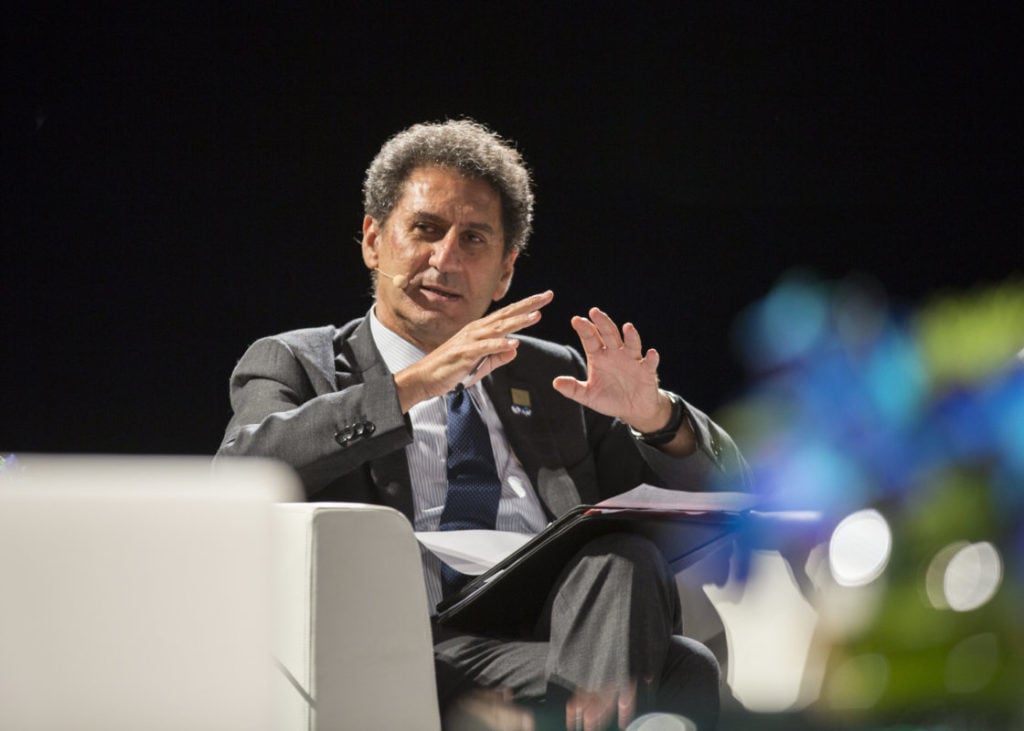
“We face the harsh reality that we are not on track to deliver on the Paris Agreement,” said IRENA director-general Francesco La Camera. “Our only option is to follow the most promising, science-based pathway one that puts renewable energy at the centre of the solution, while leading countries to energy security, reduced energy costs, and forward-looking industrial development. The energy transition must become a strategic tool to foster a more equitable and inclusive world.”
In order to foster this world, IRENA’s document sets out a number of targets for renewables in general and solar power in particular. According to the agency, the world’s solar PV capacity would need to increase from 3,372GW in 2022 to over 5,400GW in 2030 and up to 18,200GW by 2050 in order to meet the goals set out in the Paris Agreement. Indeed, electricity generated by solar PV and wind will have to account for 46% of the world’s electricity by 2030, and 70% by 2050, up from just 9% in 2020.
The WETO document also drew attention to discrepancies in renewable power funding, noting that, in 2020, 83% of investments into solar PV came from private finance, compared to just 3% of hydropower investments coming from private sources. The report notes that: “Stronger public sector intervention is required to channel investments towards countries and technologies in a more equitable way.”
Small victories
However, IRENA did point to a number of more positive developments; encouraging signs that the world is making progress towards a decarbonised future, albeit slow going. The report drew attention to government funding schemes in South Korea and Italy which had encouraged greater investment in solar projects, and initiatives such as these fit with IRENA’s calls for greater public funding for renewable power projects.
Solar power was also one of the most accessible forms of electricity generation, according to the report, with the weighted average levelised cost of electricity of new utility-scale PV projects falling by 88% between 2010 and 2021.
Considering that much of the hesitancy regarding large-scale investments in solar power stems from concerns about the accuracy of forecasting the price of electricity, and as a result the financial benefits of a range of solar projects, keeping the cost of producing solar power down could help encourage more investment in new solar facilities.
Solar PV is also the fastest-growing power source in the world according to the report, with a 26-fold increase in the number of new PV installations between 2010 and 2022. IRENA placed the responsibility for this dramatic improvement on “significant cost reductions backed by technological advancements, high learning rates, policy support and innovative financing models,” with the implication being that all of these components will be required to ensure the world’s clean power capacity grows in the future.
Much of the new capacity is in China, and the IRENA report noted that of the 191GW of PV capacity added in 2022, 59% was built in China. This trend looks set to continue, with China already having added more than 60GW of capacity in new projects in the first five months of this year.