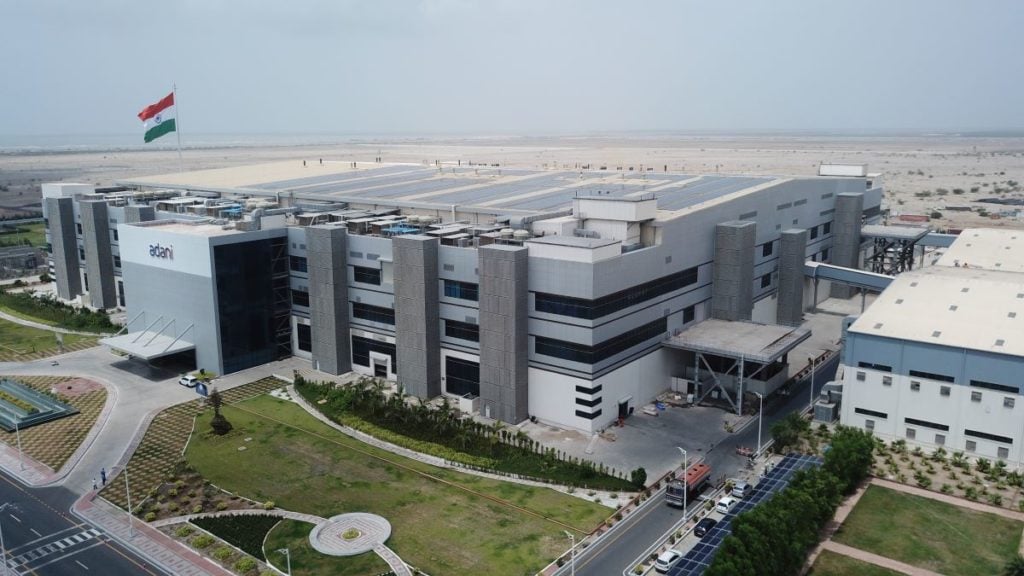
Indian conglomerate Adani has raised US$394 million for solar manufacturing through its renewable energy subsidiary Adani New Industries.
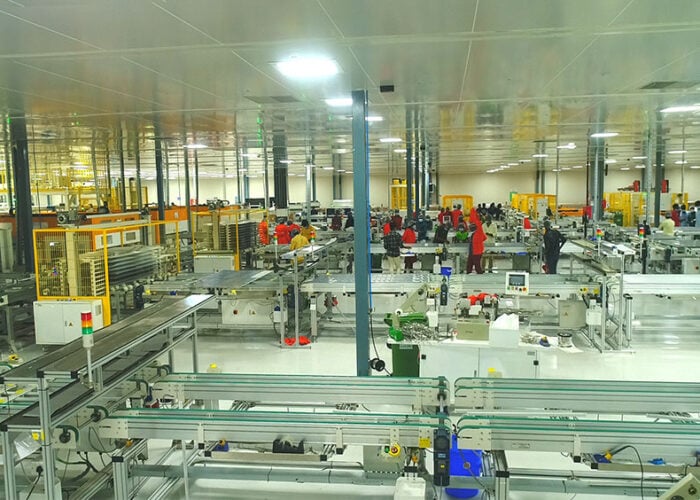
The financing came from Barclays PLC and Deutsche Bank AG through a trade finance facility, as reported by Mercom Clean Energy Insights, and will support the construction of a 10GW vertically integrated manufacturing facility. The site will cover the whole manufacturing stream from polysilicon to finished modules.
Try Premium for just $1
- Full premium access for the first month at only $1
- Converts to an annual rate after 30 days unless cancelled
- Cancel anytime during the trial period
Premium Benefits
- Expert industry analysis and interviews
- Digital access to PV Tech Power journal
- Exclusive event discounts
Or get the full Premium subscription right away
Or continue reading this article for free
The facility will form part of an integrated green hydrogen ecosystem, which will include wind turbine manufacturing as well.
Late last year the company announced its intention to have 2GW of silicon ingot and wafer capacity in India by the end of 2023, following its production of the country’s ‘first’ large-sized monocrystalline silicon ingot.
A report from JMK Research earlier this year predicted that India is on track to reach 110GW of nameplate module production capacity, becoming self-sufficient to reach its PV demand. Adani will play a large role in this, as the country’s largest and most integrated module manufacturer.
The company has been previously accused of fraud, which significantly impacted its market value to the tune of US$125 billion. However, PV Tech Premium spoke with industry experts following the allegations who suggested that the events wouldn’t really hamper the progression of the Indian PV industry.
The main barrier to growth in the last year has been a shortage of modules available to developers in India following the country’s protectionist basic customs duty (BCD) and Approved List of Models and Manufacturers (ALMM) policies, which impose steep tariffs on imported PV products (mostly from China) and restrict the companies and products that can be deployed.
In response to supply shortages, in February the government relaxed the ALMM for two years, and in 2020 introduced the Production-Linked Incentive (PLI), which in its second round of March this year awarded 40GW of manufacturing capacity contracts.
In the first half of this year, amidst the ongoing shortage as capacity gradually ramps up, India’s PV deployments fell 19% year-on-year. Analyst firm Bridge To India told PV Tech Premium earlier this year that the module ‘crunch’ is set to abate in 2024.