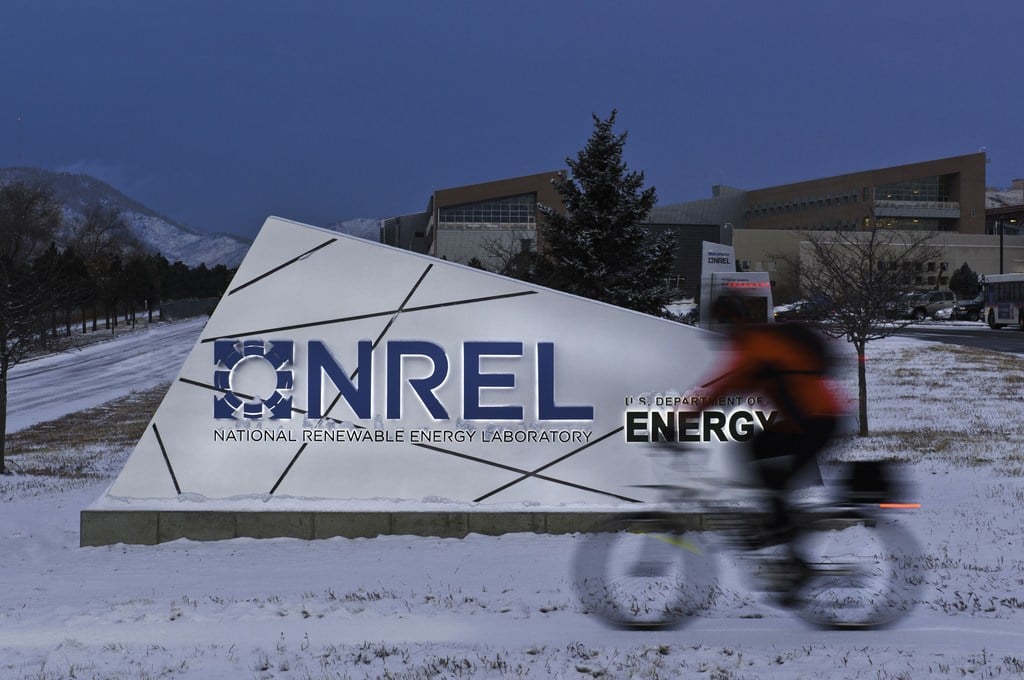
The National Laboratory of the Rockies (NLR), previously known as the National Renewable Energy Laboratory, has laid off 134 employees.
This is the second time the laboratory has been affected by job cuts since the Trump administration took office in January 2025. Last May, 114 employees were laid off in research and operations at the NLR headquarters in Golden, Colorado, US.
Try Premium for just $1
- Full premium access for the first month at only $1
- Converts to an annual rate after 30 days unless cancelled
- Cancel anytime during the trial period
Premium Benefits
- Expert industry analysis and interviews
- Digital access to PV Tech Power journal
- Exclusive event discounts
Or get the full Premium subscription right away
Or continue reading this article for free
“Earlier this week, the National Laboratory of the Rockies (NLR) implemented workforce actions affecting 134 employees across the laboratory, including roles in both research and operations. These actions were taken to adjust to existing and projected funding levels and alignment with DOE priorities. We recognise the meaningful contributions of those impacted and the role they have played in advancing the laboratory’s work,” said a NLR spokesperson to PV Tech.
No details were given regarding which research programme has been affected by the job cuts.
US Representative, Brittany Pettersen, said: “Donald Trump has consistently put our federal workforce on the chopping block. These are people who work to make energy more affordable, conduct groundbreaking climate research, and keep our state up and running.
“Beyond being some of our country’s brightest minds, these are our community members, our neighbors who have families to support. Trump’s backwards agenda is going to undo the progress we’ve made to combat the climate crisis and have cascading effects on our economy. I’m deeply sorry to the employees whose livelihoods are now in jeopardy.”
The new round of layoffs comes two months after the US Department of Energy renamed the laboratory at the end of 2025, in a move to reflect the Trump administration’s “broader vision” of the organisation’s applied energy research, which traditionally focused on alternative and renewable energy sources.
After five editions of Large Scale Solar USA, the event becomes SolarPLUS USA to mirror where the market is heading. The 2026 edition, held in Dallas, Texas, on 24-25 March, will bring together developers, investors and utilities to discuss managing hybrid assets, multi-state pipelines, power demand increase from data centres and AI as well as the co-location of solar PV with energy storage in a complex grid. For more details and how to attend the event, visit the website here.