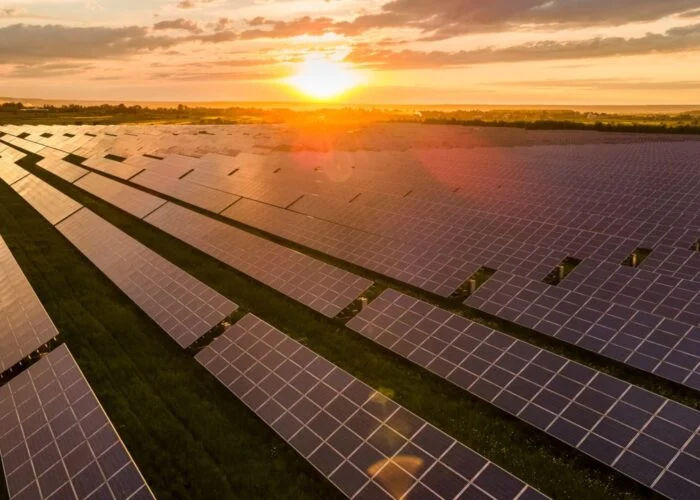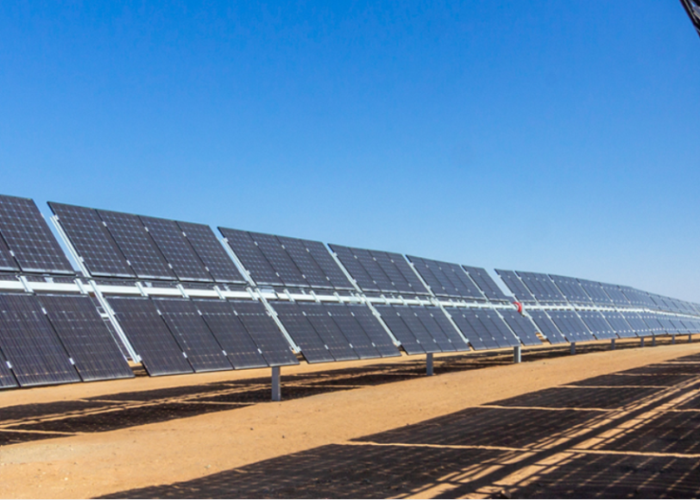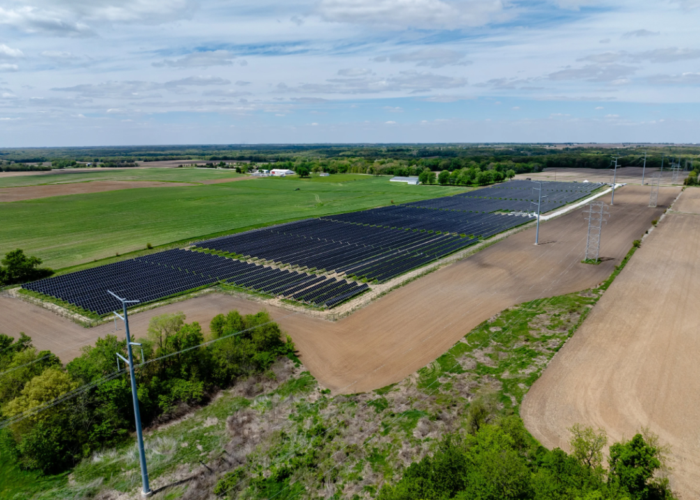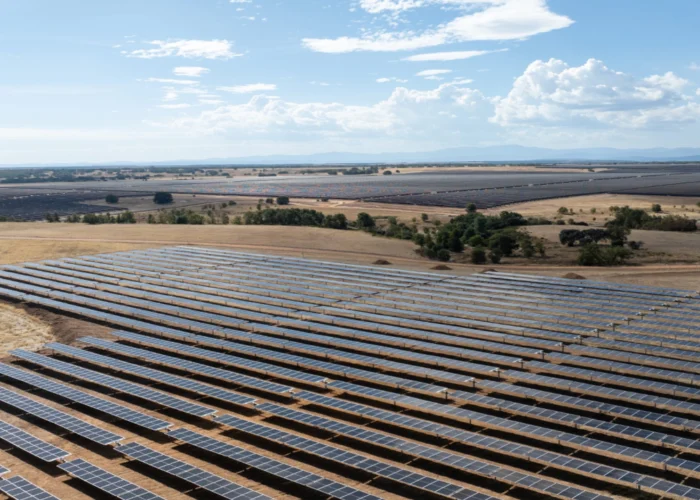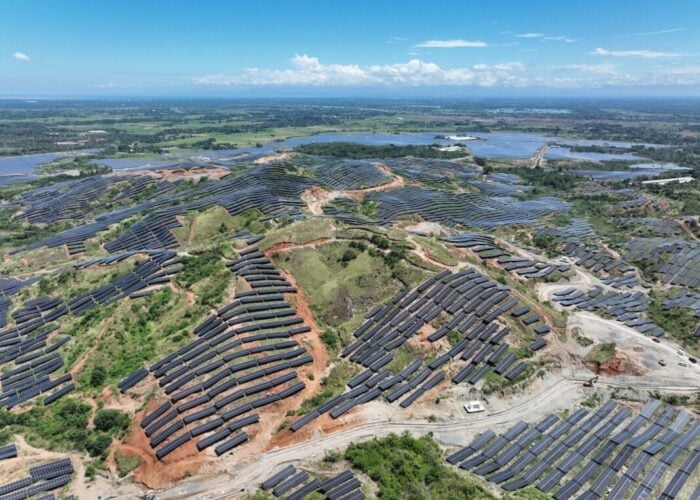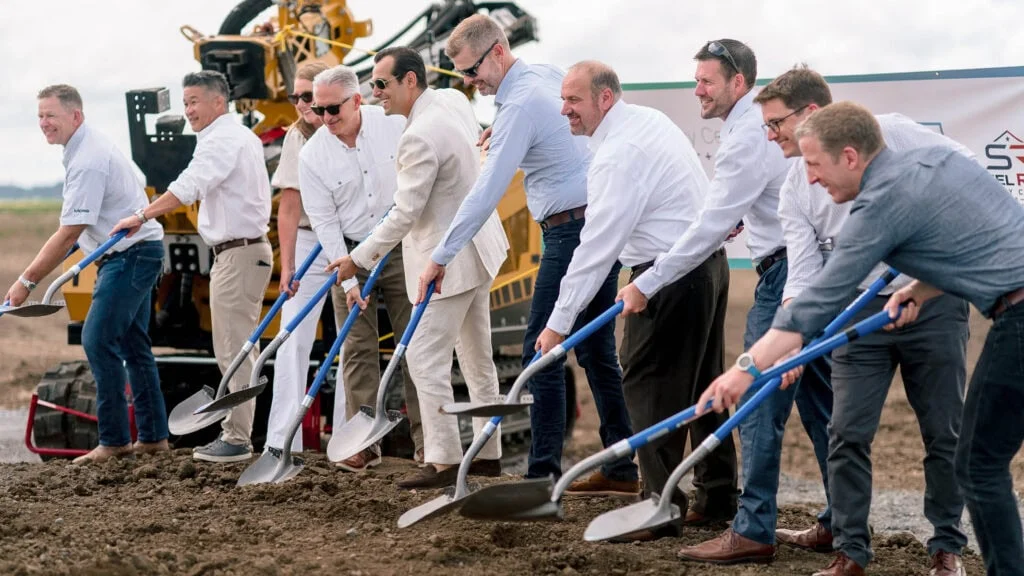
US independent power producer (IPP) Cypress Creek Energy has started construction work at its Steel River Energy Center in Arkansas, which will combine 2.5GW of solar PV capacity with 2.9GWh of battery energy storage when complete.
Power from the first two stages of the project will be sold to tech giant Google under a power purchase agreement.
Try Premium for just $1
- Full premium access for the first month at only $1
- Converts to an annual rate after 30 days unless cancelled
- Cancel anytime during the trial period
Premium Benefits
- Expert industry analysis and interviews
- Digital access to PV Tech Power journal
- Exclusive event discounts
Or get the full Premium subscription right away
Or continue reading this article for free
While this project is expected to be the largest solar project in the US, construction and commissioning of the project’s components will not be completed in a single phase. The start of construction this week covers the first two phases of the project, which include 1.6GW of solar PV and a 1.9GWh battery energy storage system (BESS), and all three phases of construction are expected to be completed by 2029.
Cypress Creek first acquired the project from Swift Current Energy in March. At the time, the company did not name the suppliers of steel and solar panels for the project, apart from describing them as “domestic manufacturers”, but has now named a number of US companies as its suppliers.
These include U.S. Steel, which will provide steel coils; First Solar, which will supply solar modules; and Nextpower, which will deliver trackers. All of these components will be built in the US. LG Energy Solution Vertech will also produce BESS for the project, the cells of which will be made “entirely” in North America, according to Cypress Creek, with manufacturing “predominantly” at US factories, Cypress Creek said.
“Some people still question whether a domestic solar supply chain is possible. This project is proof,” said Cypress Creek CEO Kevin Smith. “Steel River is the largest solar project with energy storage in the country, and it’s being built with 100% US-made solar panels and structural steel.”
Kate Brandt, Google’s chief sustainability officer, added on LinkedIn that the project’s “deep local roots” are an important component of its work, and that it will fund “new energy affordability and efficiency initiatives” for local residents and schools.
A number of companies have sought to expand manufacturing capacity in the US in recent months, to reduce reliance on importing products and components from overseas, and in response to tariffs and duties imposed on some of these products by the Trump administration. In June, QCells started cell production at a 3.3GW facility in Georgia and in May, SEG Solar announced plans to expand its module assembly facilities in Texas.
Further upstream, Corning started production of ingots and wafers at a Michigan facility late last year and building a domestic supply of these kinds of upstream components will be key to ensuring the US can minimise its reliance on imported products; this was the opinion of PV Tech Market Research’s Moustafa Ramadan and Joe Hennessy, who wrote a blog for PV Tech last month on this topic.
Google operating as investor and offtaker
Cypress Creek’s Steel River project is also notable for the involvement of tech giant Google, which is both an investor in and an offtaker from the facility, having signed a PPA to acquire electricity generated at the first two phases of the project.
In addition to being the largest solar project in the US upon completion, the facility will be the largest solar and storage project across Google’s global portfolio of clean energy procurement, which has grown considerably in recent years; earlier this year, Google signed offtake agreements for a 525MW portfolio of solar projects in Oklahoma and a 400MW solar project in Texas.
Google has also sought to be more involved in managing clean power projects, the products of which can be used to meet the massive electricity demand of its growing fleet of data centres. In March, Google acquired US renewable energy developer Intersect Power and quickly announced plans to build a new co-located wind, solar and BESS facility in Texas to meet this power demand.
“By pairing massive solar arrays with battery storage, the project can store the sun’s peak daytime output and feed it back into the grid exactly when it’s needed most,” said Brandt, of the Steel River project’s solar-plus-storage component. “This creates a more reliable, resilient grid that can meet rising electricity demand while keeping power affordable for everyone.”