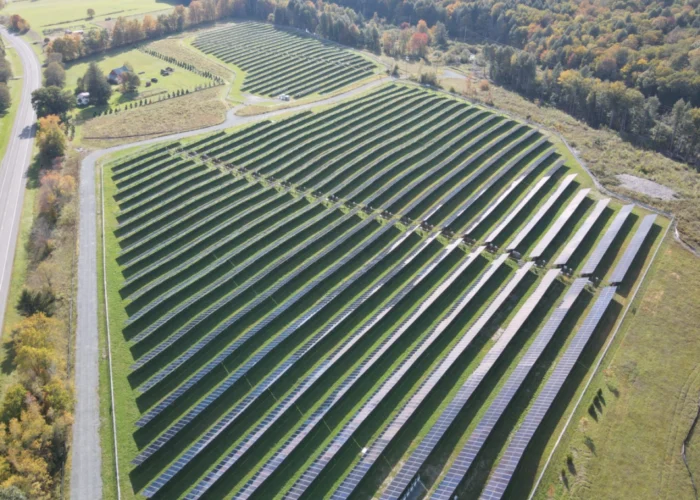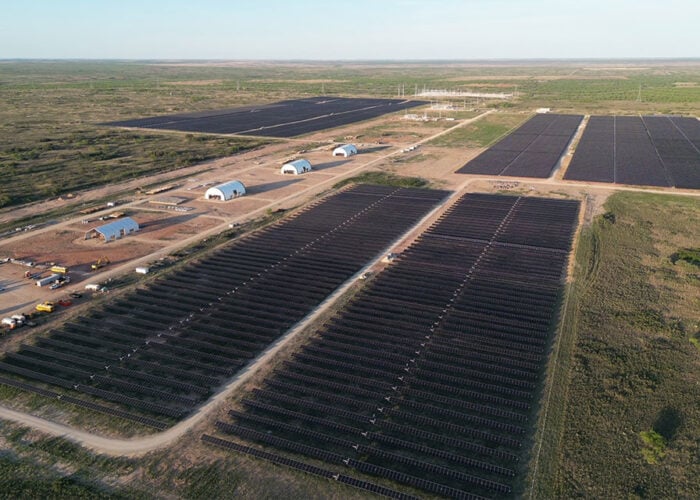
Domestic PV manufacturing activity in the US has continued to grow this year, with many announcements from companies that are either building new facilities or starting commercial production of cells or modules.
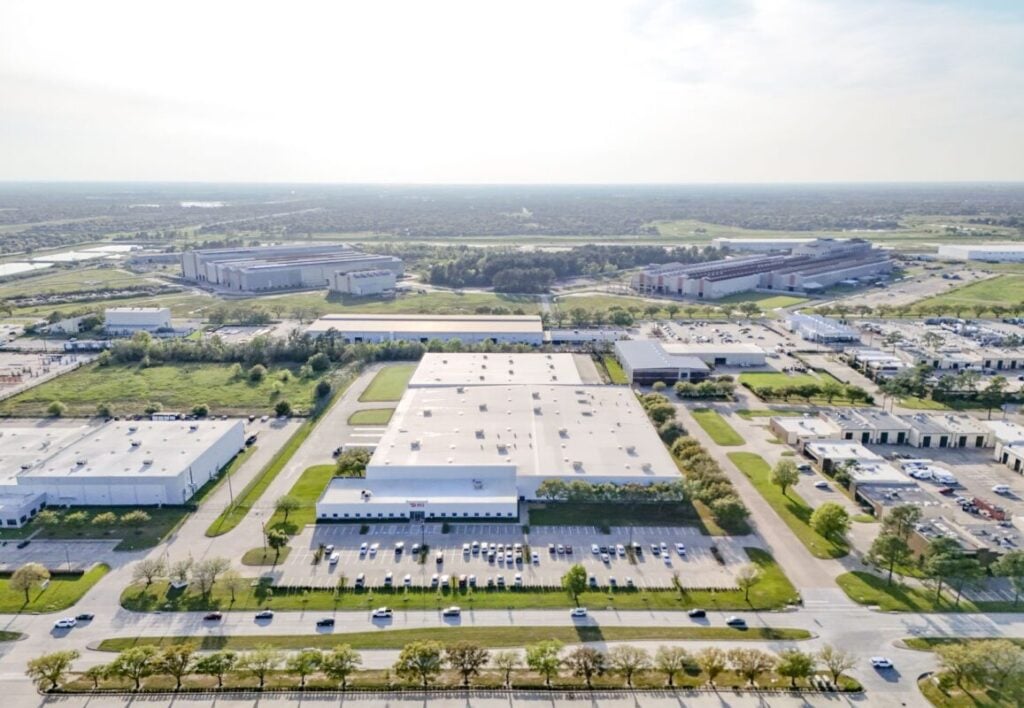
One of those companies is Houston-based manufacturer, SEG Solar, which announced in May a second module assembly plant and, in June, a third. Both module assembly plants will add a combined 8.6GW of annual nameplate capacity, and once fully operational, will bring the company’s total module nameplate capacity in the US to 10.6GW.
Try Premium for just $1
- Full premium access for the first month at only $1
- Converts to an annual rate after 30 days unless cancelled
- Cancel anytime during the trial period
Premium Benefits
- Expert industry analysis and interviews
- Digital access to PV Tech Power journal
- Exclusive event discounts
Or get the full Premium subscription right away
Or continue reading this article for free
Jim Wood, CEO at SEG Solar, tells PV Tech that the second module assembly plant is forecast to open its doors in August, with commercial operations set for the fourth quarter of 2026. Construction of the third facility is expected to finish in March or April of 2027. With module production beginning in the coming months at the second module assembly plant, this will also bring heterojunction (HJT) module production online, explains Wood: “We’ll be producing heterojunction this year in the US”
On top of these three module assembly plants, Wood said that the company was working on building a 2GW HJT solar cell processing facility in the US too. Unveiled during ModuleTech USA in Napa, California, last month, Wood mentioned that the company had begun site selection for the facility.
Until the solar cell processing plant is up and running, Wood said that the company will use solar cells from its Indonesia facility for part of this year, and then the company will pivot to the facility in the Philippines. This comes as preliminary antidumping (AD) and countervailing duties (CVD) on imports of crystalline silicon PV cells from Indonesia were issued by the US Department of Commerce earlier this year, with rates of 35.15% and 104.38%, respectively.
“Prior to the AD/CVD case, we shipped enough cells to kind of keep us going until sometime in Q3 of this year. We had brought in enough cells before the tariff deadline,” explains Wood.
He adds that the solar cell plant in the Philippines is more of a short-term solution, while the Indonesia facility continues to operate due to continued demand for domestic content in the Southeast Asian country.
“We’re continuing to fight the AD/CVD case, and we want to get our own rate. We expect that within 12 months or less from now, we’ll have our own tariff rate out of Indonesia, and that’ll be much lower than the current rate. Our expectation is that the facility will still be usable for the US market.”
Also in Indonesia, the solar PV manufacturer is building an ingot and wafer manufacturing plant with a 3GW annual nameplate capacity, which will supply both the Indonesian and the Philippines solar cell processing plants. Wood forecasts that production at the ingot and wafer facility will begin at the end of this year or by Q1 2027.
Policy support beyond 2030 to onshore ingots and wafers
When asked about the possibility of also building an ingot and wafer facility in the US, Wood did not discard the possibility outright and was open to the idea.
“Ingot and wafer [manufacturing] is expensive. It’s a huge and significant investment for a company like SEG. We tend to build things first outside of the US, learn how to do it, make our mistakes where they’re going to be cheaper, and then we build it in the US after we know what we’re doing.”
Wood explains that building ingot and wafer capacity in the US is going to take time and also policy support that extends beyond 2030 to make a manufacturing project like that financially viable. “If we could get an extension of the incentives here in the US, then it would give us a clear pathway to continue to go down the path of doing ingot and wafer in the US.”
Selecting heterojunction over other technologies
And behind the company’s technology roadmap in the US, the technology of choice for these new facilities is HJT.
Wood explains the reason for going with HJT is due to the IP issues around TOPCon in the US, and that two lines in the Houston factory that will open in August will be dedicated to that technology.
“With IP and policy and those types of things, we want to just make sure that we still can produce solar panels for our customer if there’s an injunction on n-type TOPCon that could freeze the US market,” says Wood, adding that “the IP around the actual product of heterojunction is expired, so there’s a lot of safety around heterojunction in the US.” TOPcon, by contrast, is the subject of a section 337 investigation by the US International Trade Commission examining whether TOPCon solar products imported into the US violate intellectual property rights held by US thin-film module producer, First Solar.
Even though the company will still have to go over a learning curve regarding the production of HJT modules, the roadmap for it still “looks good for the next several years,” adds Wood.
When asked about the fact that the technology seems to have lost favour in China, as highlighted in the results of this year’s PV Module Reliability Scorecard by Kiwa PVEL, Wood explains that the reason was cost and the current environment for solar manufacturing in which every penny matters.
“Our estimates are that it’s about a penny more to produce it. When you look at the US market, it’s different from the rest of the world. It’s one of the few havens of margin left on the planet for PV, and so when you look at what a module sells for in the US, it sells for quite a bit more.”
The module price difference in the US versus the rest of the world could help reduce the cost difference of manufacturing HJT modules over TOPCon in the country, and also help make the bridge from PERC to n-type technology before the next generational jump to perovskite.
“The only reason p-type is still surviving in the US is because of the domestic content adder, not because anybody is super excited about using p-type in the US. The incentive structure makes it kind of work here in the short term, but in the long term, when you look at how to be successful in the US policy structure, you have to get as many watts as you can, because you get paid seven cents per watt on the module side from your incentives,” explains Wood.
Sourcing equipment for HJT lines
SEG Solar, as well as Canadian Solar, has been amongst the first movers to build HJT capacity in the US, while other companies are set to follow suit in the coming months, as mentioned in the key takeaways from ModuleTech USA last month.
According to Wood, the more recent announcements to build HJT capacity might find difficulty in procuring the necessary equipment from China. Procuring European HJT equipment remains a possibility, but it would make things a little more challenging due to the higher capital expenditure compared with Chinese equipment providers.
“I could definitely see companies that didn’t already secure their HJT equipment having issues, because China hit the brakes very recently in the last 30 days on heterojunction exportation of equipment to the US,” explains Wood, adding that some companies might end up having to go through European equipment manufacturers to secure the production lines.
The state of the US solar supply chain will be explored in detail at our annual PV CellTech conference in San Francisco on 13-14 October 2026. For the full agenda and details on booking, click here.